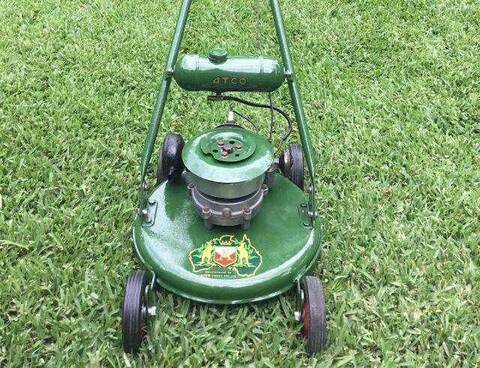
Obviously the pullies are higher, but do yo mean the flywheel covers?
The covers generally have a large flat washer between the plate and fly to stop dust getting in the puller holes....Maybe one is missing? The Red one looks higher if this is what you mean. Just measure it
I actually think theres nothing and you just wanted to taunt me with your little Rotos lols....
I cant see it, but there are a few variances in bases.
Differences included overall height, angle height, width and metal guage.
They are generally quite small though.
Axle mounts have the largest variances, but you would think with the same jigs they would all be good.
Holes for the engine can also be offset or not inline.
I have an early 2 that the apprentice must have done, as the front axles mounts are offset nearly 20mm to that of the rear, and they are also welded on a 15� angle!
Its possible one base is a model 1 especially if it has an early serial no...
So with all that said, one could definitely be higher, only a measurement will tell.
A good friend of mine called in this morning with a gift from his father, recently I fitted a set of rings to his dad's power torque and gave it a service and a good clean up. He had an old toe cutter under the house that he wanted me to have :-) ....
The hook on the front of each height adjuster housing corresponds with a block that is part of the casting for the base. A rod which supports the front or rear flap is held in the mounting. I believe this mower to be an ex auto, at 130420 it must be one of the very last.
Thanks Paul. Can you clear up one other thing please whats the story with the side holes? Why are these such a point of interest? Does it just help determine the age? Thanks Danny
Imagine if the box was for the Victa Auto! This ones an Automatic isn't it?
It's a Model 4 chassis for sure, but that doesn't necessarily mean that it was set up as a 'Model 4 Automatic' when it left the factory. Victa apparently assembled quite a few 'Model 4 Standard' units on this chassis, to use them up after the Automatic was discontinued. The highest ODK-confirmed Auto engine serial is in the 128,000's.
The main diagnostic telltales for Automatic originality will be: 1. If there is any visible wear on the chassis lugs, from the Predicta mechanism pivot rods; 2. How the second cable hole in the carby top is plugged - and if it's there.
That's on the mower as it stands; who knows what the box o' bits might reveal...
Can you clear up one other thing please whats the story with the side holes? Why are these such a point of interest? Does it just help determine the age?
If you mean the side skirt mounting bolt holes and the associated casting bosses, yes the presence of these on the left hand side [from operator's POV] of the chassis, along with the RHS 'edger channel', is definitive for a Model 4 chassis.
Absence of these holes/bosses, on a chassis that has the edger channel, makes it an early 'Model 5 Special'; a Series 1 if it has the Predicta lugs on the axle mounts, Series 2 if the lugs are absent.
These 'Series' designations are just what ODK members have come up with, to define the major chassis feature variations which occurred during the production run of the Model 5, BTW. They're not 'official' designations, but still very useful in working out where a given mower fits into the production sequence.
Cheers, Gadge
"ODK Mods can explain it to you, but they can't understand it for you..."
"Crazy can be medicated, ignorance can be educated - but there is no cure for stupid..."
Thanks Gadge. It's a lot for a greenhorn to get his head around. I have been doing my homework around here but models and series and differences and build dates is all bit of a head scratcher. Thanks for the link I haven't gotten to the end yet.

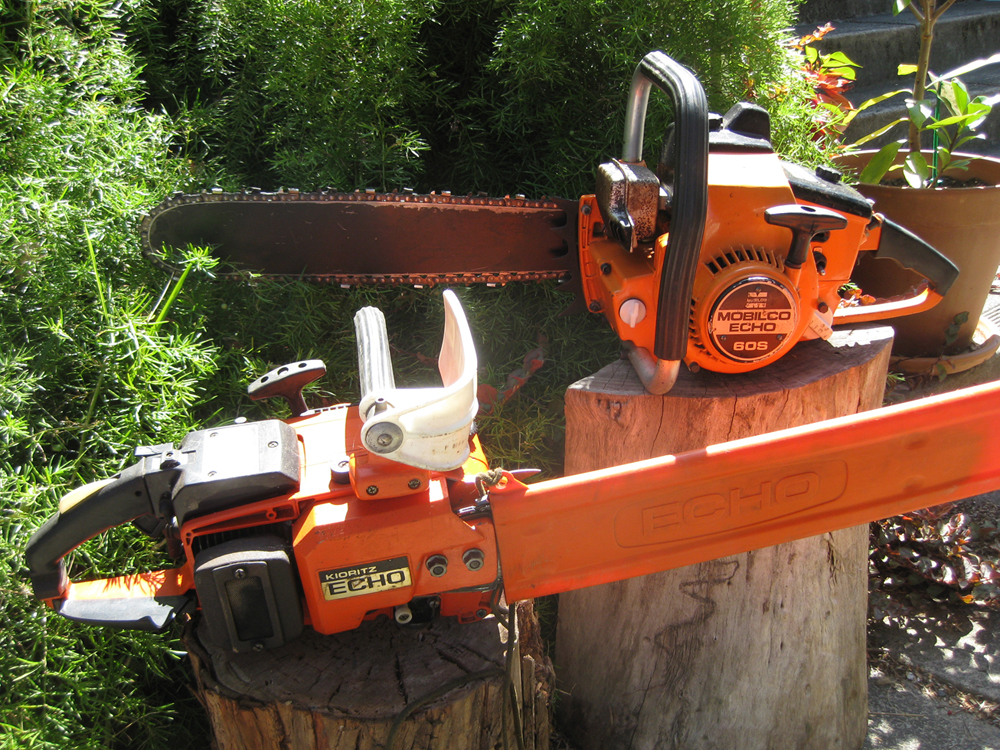

 nice line up though
![[Linked Image from i313.photobucket.com]](http://s313.photobucket.com/user/prc2008/media/20151001_141726_zpsfonbmvox.jpg.html)
![[Linked Image from i313.photobucket.com]](http://s313.photobucket.com/user/prc2008/media/20151001_141750_zpsjbni78tm.jpg.html)
![[Linked Image from i313.photobucket.com]](http://s313.photobucket.com/user/prc2008/media/20151001_141759_zpsfsycqwbj.jpg.html)

![[Linked Image from i313.photobucket.com]](http://s313.photobucket.com/user/prc2008/media/20160226_124614_zpsdatcrnjk.jpg.html)
![[Linked Image from i313.photobucket.com]](http://s313.photobucket.com/user/prc2008/media/20160226_124915_zpseoynntoh.jpg.html)
![[Linked Image from i313.photobucket.com]](http://s313.photobucket.com/user/prc2008/media/20160226_124752_zpsowpfk39r.jpg.html)
![[Linked Image from i313.photobucket.com]](http://s313.photobucket.com/user/prc2008/media/20160226_124727_zpsbokhtpe0.jpg.html)
![[Linked Image from i313.photobucket.com]](http://s313.photobucket.com/user/prc2008/media/20160226_124711_zps0gkailcu.jpg.html)
![[Linked Image from i313.photobucket.com]](http://s313.photobucket.com/user/prc2008/media/20160226_124705_zps5ywvjmwj.jpg.html)
![[Linked Image from i313.photobucket.com]](http://s313.photobucket.com/user/prc2008/media/20160226_124628_zpsh2g6ybyj.jpg.html)
![[Linked Image from i313.photobucket.com]](http://s313.photobucket.com/user/prc2008/media/20160226_124643_zpscuylog9s.jpg.html)