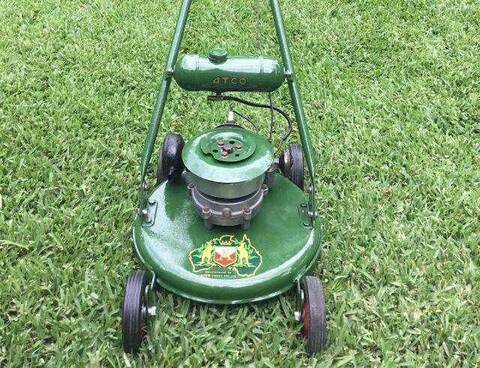
Leshby, I'm not familiar with the transmission on your mower, but I'm guessing it is the variable ratio type that uses two disks at right angles to each other, so the edge of one disk runs against the flat side of the other disk. Drive ratio is varied by moving the edge-on disk across the flat-side disk, to change the effective radius it is running at. The transmission control lever usually has several detent positions to fix the radius and therefore the drive ratio. When you look at the flat disk, it usually has grooves worn in it in the running positions corresponding to the detent positions set by the transmission control lever. When those transmissions only have three speeds, it may be possible to alter the adjustment of the transmission control linkage to obtain three different speeds that do not correspond to the worn patches on the flat disk.
Those transmissions require rather high contact pressures between the edge-on wheel and the surface of the flat wheel, and cannot use a soft friction material like cork. The material will be something quite similar to the brake lining material used for drum brakes. (Disk brake friction material is much thicker, and is normally pre-cut and bonded in the factory: only drum brake shoes are re-lined when they wear out.)
The short answer is that relining your transmission disk will require clutch facing or brake lining material such as is used for relining drum brakes or manufacturing clutch plates. Because of the very high local pressures on the lining caused by the tiny contact area between the two disks, I suggest it will need to be properly bonded onto the disk using the hot bonding process used for brake linings. Note that even when that bonding process is used by brake shops, sometimes failures occur and the linings fall off, causing considerable annoyance, if not loss of life, to the motorist. It is best to have the relining job done by someone who has done it before. This is quite different to the bonding process required to put clutch facings onto ride-on mower clutch plates - those can successfully be attached with contact cement, but the same does not apply to two-disk transmissions.