|
1 members (Red Rum),
4,947
guests, and
638
robots. |
|
Key:
Admin,
Global Mod,
Mod
|
|
|
|
Joined: Jan 2013
Posts: 445 Likes: 1
Qualified Junior
|
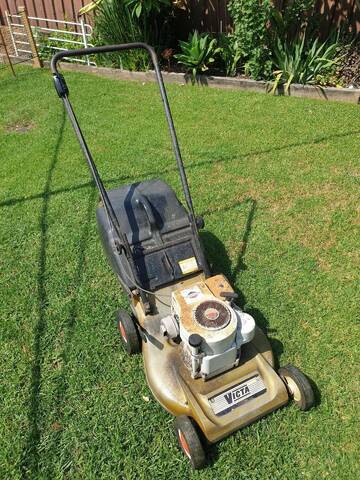
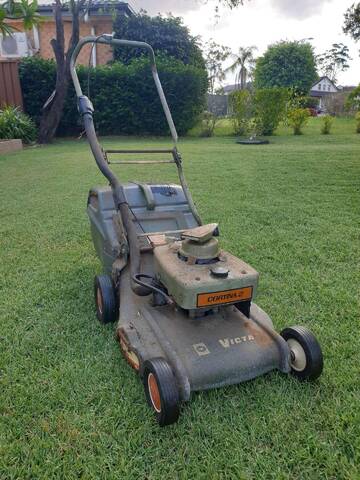
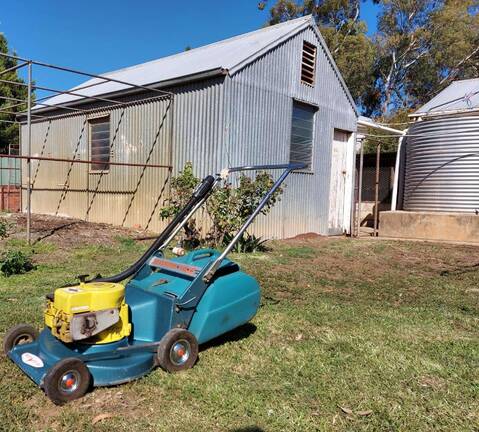
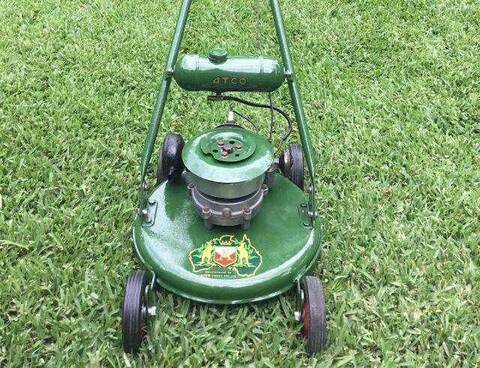
Well I acquired this Rover Mower with a Suzuki Engine a little while ago Upon getting the mower it ran but hunted really badly at idle and full speed. Initially I gave the carby a good clean and replaced the air filter as the filter as it was a homemade job. Upon putting the unit back together which wasn�t easy, the unit ran a lot better�.. However once the unit warmed up it started hunting again, albeit only minor but more than enough to annoy me. I found it strange that the engine doesn�t hunt until it warms up. To others this might not be strange however I haven�t seen this before. So far: I checked the top and bottom crank seals. Both are in excellent condition and so now signs of leaks. The bL88dy flywheel was difficult to get off. I gave the carby another clean today with carby cleaner and compressed air. I double checked the gaskets against the carby and they are all good. I am thinking it might be worthwhile getting a new set as I understand they are prone to leaking. I removed the exhaust and checked the pistons/ rings. They are in spot on condition. Upon re-installing the carby today and firing it up the engine now doesn�t start. It fired for a second or 2 on the first pull and from then nothing. Think I need to check the carby again. I re-checked the linkages and everything is as per the manual. The choke opens and closes as it should when you adjust the throttle Not sure what I have done wrong with the second carby clean. It started easily and ran good however now nothing. I�d appreciate some suggestions as I think this mower has done very little work. Some photo�s below for everyone�s reference. Oh and I forgot to mention that I should I bit in the fuel tank that looks like its come loose from the cap�������.. ![[Linked Image]](https://www.outdoorking-forum.com.au/forum/uploads/usergals/2013/10/full-6412-12899-img_0378.jpg) ![[Linked Image]](https://www.outdoorking-forum.com.au/forum/uploads/usergals/2013/10/full-6412-12900-img_0379.jpg) ![[Linked Image]](https://www.outdoorking-forum.com.au/forum/uploads/usergals/2013/10/full-6412-12901-img_0380.jpg) ![[Linked Image]](https://www.outdoorking-forum.com.au/forum/uploads/usergals/2013/10/full-6412-12902-img_0381.jpg)
|
|
|
|
|
|
Joe Carroll
Unregistered
|
I havent had a lot of experience with the rover/suzuki engines, does it fire if you put a bit of fuel down the carb? With these I have found the easiest way to get the carby off without having dramas with the linkages is to take the two nuts that hold the air filter housing on, tighten them against each other on the studs sticking out and unscrew the carb mounting studs out of the block.
Personally I would say there is a minor blockage there somewhere, it may be worth one last time pulling the carb down and blowing everything out with compressed air...
|
|
|
|
|
Joined: Jan 2009
Posts: 6,926 Likes: 11
Pushrod Honda preferrer
|
The symptoms seem fairly consistent with a floating fuel blockage upstream of the carburetor. I suggest you do Joe's test and find out if it will start and run very briefly if you put a spoonful of fuel into the carburetor intake or directly into the cylinder. If it does you've proved it is a fuel blockage. Try disconnecting the fuel line where it attaches to the carburetor, and see how long it takes to fill a cup with fuel, directly from the fuel line. If the fuel does not run full stream, clean out the tank, tap, filter if it has one, and fuel line so that you get full stream flow.
|
|
|
|
|
Joined: Jan 2013
Posts: 445 Likes: 1
Qualified Junior
|
Thanks Grumpy and Joe. I'll get on the job tonight.
I should have thought of removing the studs that way just like the way I do it on a full crank victa 2 stroke engine. thanks joe. That would have saved me a lot of fiddling and obcene words flying around my shed yesterday afternoon.
Thoughts on the fuel cap photo's? Something definately looks wrong.
|
|
|
|
|
Joined: Oct 2013
Posts: 2
Novice
|
Hi Jaffa J
Like you, I've encounted problems with my mower.
Having removed the carby because of a starting problem,I was unable to complete the task at the time and having had to leave it for a while, am now having difficulty in remembering how to connect the linkage closest to the bottom end of the throttle cable.
Any assistance you can provide is greatly appreciated.
Regards
Steveo
|
|
|
|
|
Joined: Jan 2013
Posts: 445 Likes: 1
Qualified Junior
|
I ended up following your instructions and doing one more clean of the carby. I also checked the fuel flow from the tank and it had a constant stream.
Upon re-assembling the carby and engine it fired on first pull and didn't hunt whatsoever and full speed which I thought was great. Medium throttle was also really great however at low idle it started to hunt again. Not badly but enough to annoy me.
I am sure I have the linkages and choke adjustment right as it starts first pull when cold. Throttle response is also good.
Is there something I have missed on the minkuni to clean for low speed adjustment? I have ordered fresh carby gaskets from the online store.
I was also after confirmation if my fuel cap is stuffed. Perhaps this could be contributing to the low speed issue. See photos in previous post.
Steve I'll post some photos once I get it spot on for you.
|
|
|
|
|
Joined: Jan 2009
Posts: 6,926 Likes: 11
Pushrod Honda preferrer
|
If you had the fuel cap installed when you did the fuel flow test, the cap can't be causing the problem. If you didn't have the cap installed, repeat the test. Your problems have been consistent with a fuel cap blockage - it has much the same effect as a floating blockage in the fuel line - but it should have been eliminated from consideration by the flow test.
Is there an idle mixture adjustment on the carburetor? If there is, richen the idle. If that fixes it, it's done. If turning the idle mixture screw toward rich doesn't have any effect, try leaning it off and see if it gets worse. Whenever an engine runs properly except that the idle mixture screw has no effect, you know you have a carburetor malfunction in the idle circuit.
|
|
|
|
|
Joined: Oct 2013
Posts: 2
Novice
|
|
|
|
|
|
|
Joined: Jan 2013
Posts: 445 Likes: 1
Qualified Junior
|
I did the flow test with and without the cap on and it didn�t make much of a difference. The petrol was flowing freely from the tap. I had another look over the engine on the weekend and its worse again. It is now hunting at high and low speeds. I have cleaned the carby as thoroughly as I know how how. Could it possibily be the needle seat? I couldn�t remove it during the cleaning process. I did however remove the top jet and float chamber. I gave it a good clean with carby cleaner and compressed air. Grumpy, Could you please explain how the mixture screw works as I havent worked on this type of carby before. I did try adjusting it however it didn�t make much difference. To make the process easier I have included an extract from the manual detailing the carby setup. The mower usually starts first pull when cold and if I move it to full speed from the choke position it runs beautifully��.but as soon as I move the thottle leaver it starts to hunt and high and low speeds. I hope this makes sense. I am determined to get this machine running again as it seems like a damm good unit. ![[Linked Image]](https://www.outdoorking-forum.com.au/forum/uploads/usergals/2013/10/full-6412-12946-suzuki_carby.jpg)
|
|
|
|
|
Joined: Jan 2009
Posts: 6,926 Likes: 11
Pushrod Honda preferrer
|
Is this a Suzuki M120X? I have the impression that it is, but need to confirm that. We have been blaming your problems on lean mixture, which is probably correct but needs to be verified. Try applying small amounts of choke when the hunting or rough running is happening, and see if that cures it. If it does, the problem is clearly lean mixture. If applying even large amounts of choke does not eliminate the symptom, it will probably not be due to lean mixture and the carburetor is the wrong place to look. The rest of this post only makes sense after you have proved that the engine runs perfectly with the right amount of choke applied. Conversely, if the choke makes no difference to the problem, you will need to look for a mechanical issue in the governor system. Have you cleaned the fuel filter? Have you carried out the flow test by putting the cup under the carburetor, with the float bowl removed, so you are checking the whole system from the tank through the filter, tap, and hose? Here is the M120X service manual: http://golftechs.us/Manuals/SuzukiAs long as you have cleaned the carburetor's fuel intake fitting, so it can't be restricting flow, the only float bowl problems that could be causing lean mixture are low float level, or a sticky or stuck float mechanism. I think the float level is not adjustable, but a problem with a worn needle could affect the level slightly. To answer your question about the pilot screw, the carburetor's idle system has an idle jet, which Japanese carburetor manufacturers call a pilot jet, and an idle mixture screw, which they call a pilot screw. The amount of fuel flow through the idle system is mainly limited by the pilot jet - the pilot screw is merely an idle mixture fine tuning device. I can usually only make any useful adjustment with pilot screws by attaching a tachometer and maximising the idle speed - there may be no effect on idle quality. You are aware of the possibility that your problems are due to an air leak through a gasket or some other fitting, into the crankcase or the intake pipe. This can be a tricky fault to find, especially in the case of a leaky crankcase gasket for instance.
|
|
|
|
|
Joined: Jan 2013
Posts: 445 Likes: 1
Qualified Junior
|
Grumpy, when the choke is applied the hunting ceases completely.
I need to try the test you indicated below by removing the float bowl. I only completed the test with the hose removed from the carby and that didnt identify any problems with fuel flow. I will also give the fuel filter another clean.
I have ordered some fresh carby intake gaskets however the current ones seem to be in really good condition. Bruce suggested I replace them anyhow.
I checked the float needle and it doesnt seem to have worn away of have been damaged.
|
|
|
|
|
Joined: Jan 2009
Posts: 6,926 Likes: 11
Pushrod Honda preferrer
|
Have you checked carefully all the way around the crankcase joints for leaks? Note that this engine uses sealant, not a gasket.
I'm pretty sure you will be aware of this, but the jets (main and idle) and the emulsion tube are prone to collecting hard gum, which will not disappear just with a quick spray with carb cleaner. I cleaned a Honda carburetor last week that had its main jet, its idle jet, and 14 small holes in its emulsion tube, clogged completely, and unable to pass carb cleaner. I had to put jet drills through all of them, then follow up with carb cleaner. I had another (same model) Honda a few months ago that ran just slightly lean (not bad enough to cause hunting) and I found its main jet was down from 0.55 mm to 0.45 mm due to gum. I was unable to shift the gum with oxy torch tip cleaners, but after a good going over with the tip cleaners, a blast of carb cleaner fixed it completely.
I tend to remember the jet and emulsion tube hole sizes now, and am not satisfied until I get a jet drill of exactly that diameter through each hole.
|
|
|
|
|
Joined: Jan 2013
Posts: 445 Likes: 1
Qualified Junior
|
Well I completed the flow test with the carby bowl removed last night and I am now confident I need a new petrol cap, unless of course you think otherwise.
So the result went like this:
1) I opened the fuel tap and the stream out of the carby bowl was steady, then after about 5-6 seconds it started to splutter, however when I took the cap off the fuel flow returned back to a steady stream.
2) When I tightened the cap back up after 5-6 seconds the fuel flow started to splutter again
So from this test I gathered the part of my petrol cap from earlier photos definitely has a purpose. I do apologise for not conducting this test properly in the first place. With the carby bowl removed the results were much more obvious.
Secondly I noticed a feature in the manual about setting the throttle linkage correctly. It specifically referred to the governor arm mount being would clockwise before installation with the throttle butterfly in the open position. I might need to repeat this process if you think worthwhile.
|
|
|
|
|
Joined: Jan 2009
Posts: 6,926 Likes: 11
Pushrod Honda preferrer
|
Thanks for that very clear report, Jaffa.
First, it seems certain that your lean mixture problem stems from a fuel cap malfunction. I suspect that by screwing the cap right down without that spacer piece that had fallen out, the fuel cap vent did not operate. You may find that you can re-attach the loose bit and get it working again. Of course a new cap would work even better.
Second, those in-the-crankcase centrifugal governors mostly work in much the same way. It is important to set the angular relationship between the governor paddle in the crankcase (which bears on the plunger that is pushed out by the centrifugal weights) and the governor arm on the outside of the engine, because the plunger has a very limited operating range. So, you rotate the paddle's shaft to bring the paddle into contact with the plunger with the engine stopped and the plunger fully retracted. Then you pull the top of the governor arm to the full throttle position, and lock the arm to the paddle's shaft. This means that no plunger movement is wasted. The plunger's role is to push the throttle toward closed, with an amount of force proportional to the engine's speed. The governor spring's role is to pull the throttle toward open, with an amount of force proportional to the speed control setting. So, if you set the speed control to maximum, with the engine stopped, the governor spring will be fully stretched and will pull the throttle firmly into the wide open position. When you start the engine, the centrifugal mechanism will push on the plunger, trying to rotate the paddle's shaft and move the governor arm toward the closed throttle position. The governor spring will keep trying to open the throttle and the paddle to close it, and they will fight each other to a standstill at some engine speed that the manufacturer decided should be the maximum. The speed is usually about 3,000 rpm for mowers, so the blades won't throw stones dangerously hard.
I suggest that you fix or replace the fuel cap, set the governor linkage as directed in the workshop manual, and then give it another run.
|
|
|
|
|
Joined: Jan 2013
Posts: 445 Likes: 1
Qualified Junior
|
Righto I think things are looking up!
Last night I did the following:
1) Replaced the two carby gaskets and the air filter gasket.
2) Replaced the carby bowl washer as it was dodgy with a proper fuel proof washer
3) Re-installed the throttle linkage making sure the paddle shaft shaft was turned clockwise and joined to the throttle control when at full throttle.
4) Re-installed the choke rod to ensure and ensure the choke was fully closed when in the choke position.
5) Installed my new fuel cap and spacer. This spacer didn�t fall into the tank so that was a plus!
Result:
Mower started very easily and ran at full speed really well with no hunting at all. It kept running after stopping and starting several time with no hunting at full speed. You have to get used to the full speed position setting.
The mower idled reasonably well, however at idle it sort of hunts ever so slightly. You can see the governor arm moving slighting however I want to understand if this is normal feature at idle speed. The idle is quite smooth and never stalls with no coughing or spluttering from the engine.
Would adjusting the carby screw we spoke about earlier enable the finishing touches to be put on this mower?
When I first adjusted the screw it was in tight. What adjustment do you suggest if applicable?
The funny thing is the guy that gave me this mower said the local shop tried to fix it but couldn�t. I do like a challenge.
|
|
|
|
|
Joined: Jan 2009
Posts: 6,926 Likes: 11
Pushrod Honda preferrer
|
Turning the pilot screw anticlockwise should richen the idle mixture slightly. Because it is a 2 stroke, I suggest you adjust the pilot screw for the best idle quality you can get, ensuring it is running at idle speed when you make the adjustment. (As the speed rises, the main jet begins to contribute to fuel supply as well, so the slower you can run it when making this adjustment the better.)
Remember, this is a 2 stroke. They don't idle well, but some are a lot better than others. If you are able to find a pilot screw position that gives the best idle quality, and it deteriorates when you turn the screw either way, all is well. Don't expect it to make a big difference, though: it isn't like a whipper snipper or chainsaw carburetor where each of the screws (H and L) tunes up sharply like a short-wave radio. The pilot screw has a very small effect because it is in series with a small jet and a small air bleed orifice.
|
|
|
|
|
Joined: Jan 2013
Posts: 445 Likes: 1
Qualified Junior
|
I took your advice and was actually pleasantly surprised on how much better the idle is after adjustment of the mixture screw. It took quite a few adjustments to get the idle to improve. There is barely any movement in the governor arm at the idle position which made me a lot happier.
I also made some minor adjustments to the choke rod which assisted greatly in the opening and closing of the choke butterfly. I have noticed that without the butterfly completely closed the engine will not start when cold. It is usually a first or second pull starter when cold now.
This weekend I will take the blade plate off and clean the string collected up around the shaft. I�ll also put on 4 new blades.
The pull cord is already in really good condition so I see no need to replace it.
I�ll also take it out for a run in the long grass down the back of my suburb and let you know how it performs to finalise the thread.
If you anyone has any other suggestions for these engines I�d appreciate your thoughts because I would like to ensure the engine is reliable as possible
Thanks again grumpy
|
|
|
|
|
Joined: Jan 2009
Posts: 6,926 Likes: 11
Pushrod Honda preferrer
|
Just a simple word of caution, Jaffa. I recommend that you follow the engine manufacturer's instructions on how much oil to put in the fuel, not the oil manufacturer's. Any recommendation of higher ratios than 25 to 1 petrol to oil is good for the environment and extends the life of the spark plug, but it is not good for the piston or rings, and perhaps the bearings. Personally I would think carefully before using less oil than 25 to 1, but of course your neighbours' air quality expectations are not a trivial matter. In the end I personally follow the engine manufacturer's instructions, especially if they say 25 to 1.
Remember, keep the air cleaner clean. Otherwise you'll find you waste your time tuning mixture, because you will then have to start again each time you service the air cleaner.
I'll look forward to your report when you have given it a workout.
|
|
|
|
|
Joined: Jan 2013
Posts: 445 Likes: 1
Qualified Junior
|
You raise an interesting point on the fuel ratio.
The manufacturer�s recommendation is 50:1. This recommendation is also clearly labelled on the new fuel cap I received which has 50:1 clearly labelled on it.
I have however been running the engine on 25:1 as the majority of other machines recommend this ratio. I figured it couldn�t hurt the engine with the exception of fouling a plug and being a little smokey on start-up. I plan on continuing to run the engine of 25:1 unless you think otherwise?
I didn�t get a chance to seriously test the engine on the weekend in long grass however I mowed my lawn without any issues.
I get back to you about the machines performance in the long grass.
|
|
|
|
|
Joined: Jan 2009
Posts: 6,926 Likes: 11
Pushrod Honda preferrer
|
The lower petrol-to-oil ratio will make the engine run a bit leaner than normal. This is partly because oil is more viscous than petrol and therefore restricts the fuel flow through the main jet, and partly because there is a bit less petrol in the fuel, and the oil doesn't really burn properly.
I take it you are running the correct spark plug, so you can probably check that it isn't overly lean by inspecting the plug after you have run it under load continuously for perhaps half an hour or so. If it comes up very pale brown, or whitish, it is too lean and you'll have to reduce the oil or you'll damage it. Of course there is no issue at idle, since you have already tuned the idle mixture.
I've already given my opinion on petrol to oil ratios: I like to protect the piston and rings by providing them with enough oil. However with a fixed main jet, to me the risk of cooking the piston through lean mixture isn't worth taking.
|
|
|
|
|
Joined: Jan 2013
Posts: 445 Likes: 1
Qualified Junior
|
Well I took the mower out last night and gave it a good run for about 30 minutes in the long grass. I personally would rate it as one of the best performing mowers I have used in quite some time. The mower was taking care of thick above knee high grass with relative ease.
The engine was a little smokey however I am sure this was related to the lower than standard petrol to oil ratio. I then adjusted the ratio to what I like to call a rich 50:1 mix that was pretty close to a 40:1 mix simply because I was trying to be cautious in accordance with your recommendation.
The mower performed really well and emitted what I think was just a standard level of 2 stroke emissions.
I did have one minor query about the engine stop setup. When you move the throttle to the stop position is takes quite a few seconds for the engine to cut-out? Is there an easy fix to make the engine stop quicker or perhaps an adjustment to be made?
Otherwise I was very happy.
|
|
|
|
|
Joined: Jan 2009
Posts: 6,926 Likes: 11
Pushrod Honda preferrer
|
The kill switch (7) is operated by the end of the governor spring lever (3) - see Page 28 of the workshop manual. ![[Linked Image]](https://www.outdoorking-forum.com.au/forum/uploads/usergals/2013/11/full-2772-13003-suzuki_m120x_kill_switch.png) I suggest that you take a look at that mechanism, while operating the speed control from full to stop. I don't have one in front of me, but your engine should stop firing the instant the lever (3) pushes the switch (7). You may need to apply a resistance meter to the switch to establish how far it has to move to kill the ignition, so you can adjust it correctly without over-travelling and breaking the switch. You might post a picture of two so we can all understand the adjustments.
|
|
|
|
|
Joined: Jan 2013
Posts: 445 Likes: 1
Qualified Junior
|
Thanks for the concise explanation. I managed to adjust the throttle cable to ensure items 3 & 7 meet. The mower now stops as it should...... However after the minor adjustment of the throttle cable the damm thing is hunting again and I have little idea why? It's hunting at idle and full speed.
The choke is opening and closing as it should.
Would resetting the govener arm again by turning clockwise as we discussed earlier be needed or do you think I have upset a setting by moving the cable ever so slightly.
|
|
|
|
|
Joined: Jan 2009
Posts: 6,926 Likes: 11
Pushrod Honda preferrer
|
I'd begin by re-checking the fuel flow rate from the float chamber, in case that problem has returned. If the flow is good, step two is gently moving the governor arm back and forth through its movement range, while looking closely at the linkage and feeling for any rubbing or stickiness. You should also check what the spark plug looks like, in case it is actually running just a bit lean.
Since the hunting seemed to clear up with proper governor adjustment, it sounds as if it is either a marginal problem or an intermittent one. These are the hardest to find. My history is that they are commonly caused by a mild air leak in the intake system, or a stiff diaphragm (fuel pump or metering) that makes fuel control marginal. Remember, you never did establish with any certainty that you don't have a crankcase air leak. You might look for oil around the crankcase and cylinder joints.
|
|
|
|
|
Joined: Jan 2013
Posts: 445 Likes: 1
Qualified Junior
|
1) Fuel flow from the float chamber is ok. No obvious fuel flow restrictions.
2) The linkages all appear to move as they should. They do not appear to be sticking in my opinion.
3) I have checked the crankcase and I can see no obvious signs of leaks (It is very clean with no oil marks even after the last good run in the long grass
4)I re-checked the spark plug and its a light brown all over. I checked a few other 2 stroke engines I have and the plugs are all clean. I might be mistaken but could the slightly richer that 50:1 mix I am using be contributing to minor hunting issue, being that the engine is running to lean.
My test this morning revealed:
1) Idle is back to being ok (a little temperamental but pretty good for a two stroke)
2) Full speed is great as long as you get the throttle adjustment right, that is right on the full speed marker
3) Things get bad when you try any other throttle position as it starts to hunt quite a bit, so much it annoys me. I thought maybe these engines are only designed for idle and full speed.
I think we are getting closer to done. I am thinking about mixing a spot on batch of 50:1 unless you think otherwise.
|
|
|
|
|
Joined: Jan 2009
Posts: 6,926 Likes: 11
Pushrod Honda preferrer
|
I see no harm in trying 50:1 and seeing if it produces an improvement. However IIRC you had it running perfectly at 25:1 for a while, so it sounds as if the fault is either marginal or intermittent.
The carburetor has different systems in operation at idle and at high load/speed. It apparently gets slightly lean in the transition between the two. If there is no air leak into the crankcase or intake port, the most likely source of the problem is the carburetor. Does it have progression holes, or just a single idle discharge port? This is the one or more tiny holes right at the throttle butterfly. If there are several holes, it may be that the ones furthest upstream toward the venturi, are damaged very slightly or obstructed. If there is only one, my guess is that you are asking too much of the carburetor. It is very common with the diaphragm carburetors on chainsaws and brushcutters to have to set the idle mixture a bit rich, to get the engine to respond smoothly at part throttle. You might try noting exactly where the idle mixture adjusting screw slot is pointed at present, then turning it anticlockwise a bit (toward richer) and seeing whether the mid-range running improves.
|
|
|
|
|
Joined: Jan 2013
Posts: 445 Likes: 1
Qualified Junior
|
When I said running really well I failed to mention the mid-range running was still questionable. I should have been clearer when describing my findings. Full speed and idle were both pretty good.
Would you be able to post an example of progression holes and a single idle discharge port as I am not familiar with these terms? I will however check this out tonight and try to get a photo for the forum.
The idle mixture screw is currently sitting about half way. I.e. half way between being fully screwed out or fully screwed in. I hope that makes sense. Turning the adjustment screw anti clockwise didn�t make much of a difference to the mid-range running when I gave it a try.
I am quite confident that I have covered all bases in regard to an air leak without splitting the crankcase and resealing it which I image would be a similar process to splitting the crankcase on a full crank Victa 2 stroke engine.
|
|
|
|
|
Joined: Jan 2009
Posts: 6,926 Likes: 11
Pushrod Honda preferrer
|
![[Linked Image]](https://www.outdoorking-forum.com.au/forum/uploads/usergals/2013/11/full-2772-13111-walbro_wa_diagram.png) This is a picture from the Walbro WA Technical Manual. You can see that at idle, it emits fuel from a single idle port near the throttle butterfly. As you open the throttle, first two more idle ports chime in progressively, then the main jet joins in, and eventually the idle ports stop emitting. This multi-port system is used to get a smooth transition from idle, using just the first idle port, to fairly substantial throttle openings, when the main jet is in full song. Not all carburetors have an idle progression system like that. Also, even if they do have that kind of system, there can still be lean spots in the progression if air is sucked in through the main discharge nozzle before petrol begins to flow out of it. Some of the Walbro carburetors have a one-way valve under the main nozzle to prevent this. The carburetor is not the only possible cause of a mid-range flat spot like yours. It can be due to a small air leak, or retarded ignition timing, or leaky ports in a 2 stroke. However knowing that you have been having mixture problems, I'd start off with that as the most likely cause. It is interesting to note that we have had another thread about an M120X with lean mixture problems, but I don't think that one was ever solved. It may be that your engine is particularly sensitive, or something may have been missed. I'm pretty confident that Suzuki designed an engine that was capable of running properly. I'd be continuing to focus on the idle system for the present. Are you sure that all of the jets are not only clean, but are still the sizes shown in this page from the workshop manual? ![[Linked Image]](https://www.outdoorking-forum.com.au/forum/uploads/usergals/2013/11/full-2772-13112-suzuki_m120x_carburetor_jet_sizes.png) Edit: You might try reading this very long report on that Suzuki engine in a Toro mower: http://forums2.gardenweb.com/forums/load/lmower/msg0423075515023.htmlAs you can see, the consensus is the same as I've said previously: aside from a problem with the fuel tank cap, the only problem causing surging in that engine is gunky jets, fuel passages, and air passages in the carburetor, presumably due to old oil going hard and staying put. I see one guy says you have to "boil it in carb cleaner". Not sure how you do that safely, but lots of people soak carburetors in carb cleaner, with good results. We are all headed in the same direction. Here is an extract from the Toro workshop manual for the Suzuki M120X: ![[Linked Image]](https://www.outdoorking-forum.com.au/forum/uploads/usergals/2013/11/full-2772-13113-suzuki_mikuni_toro_illustration.png) I suggest you just do exactly what Toro recommends, including remembering not to expose the plastic parts to carb cleaner.
Last edited by grumpy; 14/11/13 10:15 PM. Reason: Add detail
|
|
|
|
|
Joined: Jan 2013
Posts: 445 Likes: 1
Qualified Junior
|
I admit I got frustrated with this mower however I did not give up on it. I have been following the most recent Suzuki mx120 post and executed all instructions to the best of my ability.
So over the past couple of days I have been soaking the carburettor in carby cleaner with every possible part removed and soaked separately. I was careful to remove all plastic components and not expose them to carby cleaner.
The more I continued to soak the more gunk kept coming out. I also used a very fine drill bit clean the ports throughout the carby including the jets. A substantial amount of black gunk came out during this process.
I carefully put everything back together which isn�t really easy with this engine, being careful to set the governor arm correctly as per our previous discussion.
The result �
1) A first pull start
2) Kept the choke on few a couple of seconds and then slowly eased it off back to the full speed setting. No hunting at all.
3) Moved it down to idle after adjusting the mixture screw and it was pretty good for a 2 stroke I thought!
4) The biggest test was mid range running and it was pretty good. The engine barely hunted at all.
Note: I haven�t put the engine under load after this carby soaking exercise however I suspect it might be ok!
Nothing else I should double check?
|
|
|
|
|
Joined: Jan 2009
Posts: 6,926 Likes: 11
Pushrod Honda preferrer
|
Just be sure there is no air leakage across the carburetor insulator gaskets, and you should have it right. At the end of the soaking exercise you should blow out all of the passages with compressed air, because if you don't some of the gunk will still be there and will re-solidify, especially in tiny or blind-alley passages.
It sounds as if you have it pretty right. The final check I like to do on carburetors is to slide a jet drill of the size given in the specifications, through each jet, outlet and seat that has a specification. Don't twist the drill bit, just ensure that it will slide through with that slight drag that signifies a size-on-size fit. The purpose here is not just to verify that you have the jets etc clear - it is to see if there is any residue still in the carburetor. If you have residue in those specified places, you have it everywhere.
Life isn't normally this hard with carburetors, it just seems that the Mikuni used by Suzuki is something of a lady-dog when it comes to cleaning. However by all reports it is a very pleasant engine once you've got its carburetor cleaned out.
|
|
|
|
Forums144
Topics12,758
Posts106,813
Members18,154
| |
Most Online40,124
Apr 13th, 2026
|
|
|
|