|
1 members (Midas),
5,727
guests, and
1,583
robots. |
|
Key:
Admin,
Global Mod,
Mod
|
|
|
|
Joined: Mar 2015
Posts: 249
Apprentice level 3
|
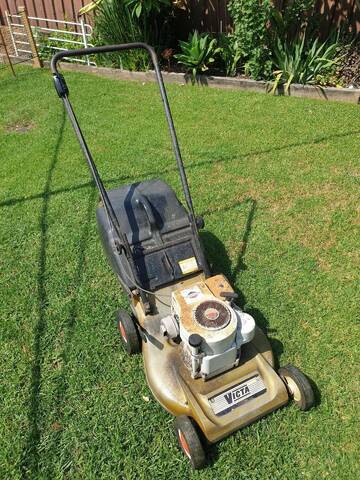
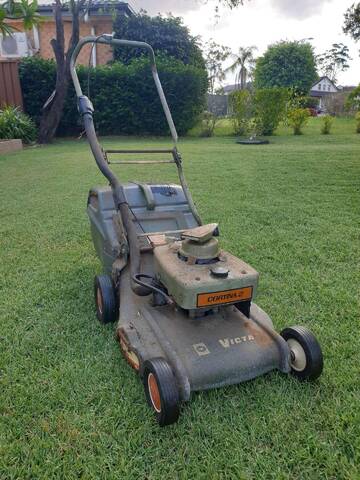
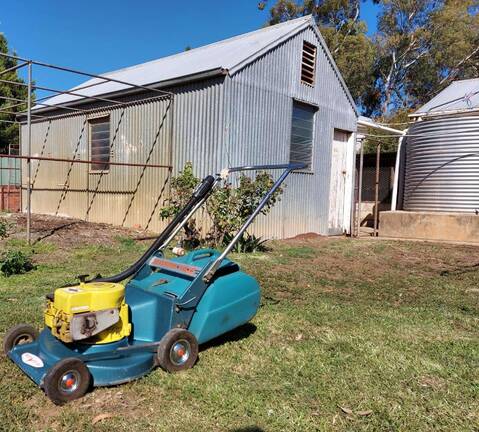
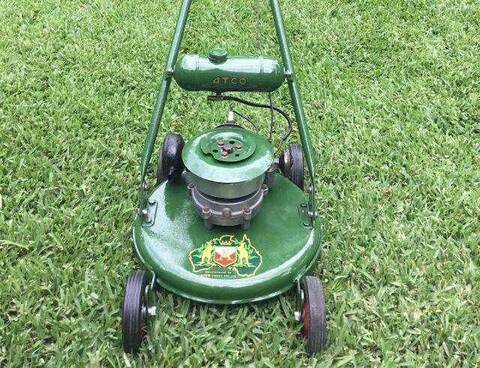
Hi guys, I;m currently tearing down / rebuilding a VICTA 2 stroke.. though not sure on the model. Is there a way I can locate the model number for5 the engine based on the engine number? If so, is there a database of some kind that I can use to look up engine numbers to finds the correct info on them? Just trying to track down a correct diagram/parts list jsut so I have a reference on what parts are what in-case I lose something or just to make sure I have all parts in order etc.. Still a newbi and I think this is the 1st 2 stroke (currently re-building a 50's 2 stroke engine too) that Ill finish rebuilding. Been told it's not worth that much and it's an 80's full crank .. but rebuilding for the experience.. ![[Linked Image from i998.photobucket.com]](http://i998.photobucket.com/albums/af101/Widget1983/mowers%20n%20stuff/VICTA%20Green%202stroke/20170215_190443_zpstyplos41.jpg) ![[Linked Image from i998.photobucket.com]](http://i998.photobucket.com/albums/af101/Widget1983/mowers%20n%20stuff/VICTA%20Green%202stroke/20170215_190253_zpssbtmcqgk.jpg) ![[Linked Image from i998.photobucket.com]](http://i998.photobucket.com/albums/af101/Widget1983/mowers%20n%20stuff/VICTA%20Green%202stroke/20170210_220635_zps3kealmn9.jpg) ![[Linked Image from i998.photobucket.com]](http://i998.photobucket.com/albums/af101/Widget1983/mowers%20n%20stuff/VICTA%20Green%202stroke/20170210_220431_zpsjpujz7ob.jpg)
|
|
|
|
|
Joined: Feb 2006
Posts: 4,675 Likes: 165
SENIOR TECHNICIAN
|
I like the deep green hammertone. This is probably the least desirable full crank model out there along with later built 1960s designed low arch base models.
Ahh, if only victa had kept producing the thumblatch catcher series, they would be in better shape today!
|
|
|
|
|
Joined: Jan 2016
Posts: 8,188 Likes: 232
SENIOR TECHNICIAN
|
Nothing wrong with those mowers, up there with the Powertorques, pull start getting a little harder to get compared to the Powertorques, motor is typical tough Victa, easy rebuilder and the piece de resistance, todays Victa catcher still fits, and there is millions of those out there. I would have one of these any day over a brand new Briggs, will still be going long after the Briggs is sent to the scrap
|
|
|
|
|
Joined: Mar 2015
Posts: 249
Apprentice level 3
|
Thanks guys  Looking at this brochure, not 100% sure, but it looks like the mower could be the VICTA CHARGER ? Looks like the same cowl and the exposed side-mounted starter pulley... can anyone confirm ?
|
|
|
|
|
Joined: Jan 2012
Posts: 1,842 Likes: 14
Moderator
|
The 80's full crank engines were the pick of the Victa 160's, IMHO. Still had the very tough and rebuildable basic engine, with low-maintenance reliable electronic ignition too. Let down somewhat by the carbies not ageing well, but nowt that isn't fixable, really. Widget, sorry but I can't see your pics due to browser/Photobucket issues at this end. We at ODK do prefer that pics be uploaded direct to our server, so that they aren't subject to the periodical Photobucket image purges, which cause them to disappear from the ken of man... How-to is HERE - one thing I should mention, is that there's a limit of 15 images in a single post.
Cheers,
Gadge
"ODK Mods can explain it to you, but they can't understand it for you..."
"Crazy can be medicated, ignorance can be educated - but there is no cure for stupid..."
|
|
|
|
|
Joined: Mar 2015
Posts: 249
Apprentice level 3
|
|
|
|
|
|
|
Joined: Jun 2011
Posts: 4,291 Likes: 4
Master Technician
|
Yes well as you said it is a good one to start with and learn from.As far as your numbers goes unfortunately I haven't found a lot of info about the series 80's engines as all the previous numbers systems that Victa used seem to go out the window.
They relied more on the Victa code and model numbers.Which were stickers and could be easily changed.From you first picture that is just a part number for the upper crankcase.
The second number (and this is only from my own observation,from mowers that I have and seen over the years) the 3 is a model number (Of which I have no idea what model) and the 9 means it was build in 1979 and sold as a series 80.The other numbers I have no idea at all most likely just a serial number.I really don't know anything more about those numbers.As I said they changed to using the Victacode and model numbers more than identifying by engine numbers.
Here for a good time,not a long time.
|
|
|
|
|
Joined: Mar 2015
Posts: 249
Apprentice level 3
|
Thanks Blumbly I'm about to re-assemble, though was hoping to get some tips on a couple of sections ? 1st, I'm planning on making the cylinder gaskets, but noticed, the base (on a donor 2stroke) has 2x gaskets on it.. I dont remember what came off the engine Im rebuilding.. I think they were just stuck to the cylinder so they tore away. Is there only suppose to be the 1x gasket for the base and 1x for the head ? I'm reading through this manual (looks to be correct manual) and only see the 1x.. thought I'd double check with you guys ![[Linked Image]](https://www.outdoorking-forum.com.au/forum/uploads/usergals/2017/03/full-9045-33317-20170306_163216.jpg) I had a role of gasket paper, can't remember the thickness, will have to find it.. is there a minimum / maximum thickness to use ? The second thing, any tips on how to Test/install/set this little thing (condenser? ) ![[Linked Image]](https://www.outdoorking-forum.com.au/forum/uploads/usergals/2017/03/full-9045-33318-20170306_163502.jpg) Thanks
|
|
|
|
|
Joined: Jan 2012
Posts: 1,842 Likes: 14
Moderator
|
G'day Widget,
Yep, there should be single gaskets at both ends of the barrel. Cardboard [cereal packet!] will do for the base gasket, but the head gasket is a heat-resistant composite material that's not easy to find in sheet form. For the whole $1.43 the ODK Shop list it for, just buy it; you'll need to buy the exhaust 'ring gasket' anyway.
As for testing of the condenser, some higher-end multimeters can test for capacitance. But the job really needs to test for leakage and series resistance as well, and that's a task for a dedicated condenser tester.
Mower shops once had these testers, often combined with a coil tester, but I doubt you'd find one easily now [tho' my motorcycle mechanic still has one].
Cheers,
Gadge
"ODK Mods can explain it to you, but they can't understand it for you..."
"Crazy can be medicated, ignorance can be educated - but there is no cure for stupid..."
|
|
|
|
|
Joined: Mar 2015
Posts: 249
Apprentice level 3
|
Thanks Gadge Is this the exhaust gasket you mentioned ? https://www.outdoorking-forum.com.au/engines...ffler-gasket-all-clip-on-models-en71904aI would very much purchase from the ODK Shop.. but at $10 postage for a couple of gaskets.. seems a bit steep  . If there was a 'letter' option ( Up to 130 x 240 x 5mm, <250g - $1-$2), that wouldn't be a problem With the condensor, my meter has a capacitance meter (+ I have a a small component tested here somewhere).. what would be the required value on one of these condenser capacitors? Also, how do you re-install one? Is there suppose to be a gap of some sort? I noticed the condenser has an adjustable screw hole on the condenser to slide it back/forth ( see pic, circled part),, ![[Linked Image]](https://www.outdoorking-forum.com.au/forum/uploads/usergals/2017/03/full-9045-33345-condens2.jpg)
|
|
|
|
|
Joined: Jan 2012
Posts: 1,842 Likes: 14
Moderator
|
Yup, that's the one. I would very much purchase from the ODK Shop.. but at $10 postage for a couple of gaskets.. seems a bit steep . If there was a 'letter' option ( Up to 130 x 240 x 5mm, <250g - $1-$2), that wouldn't be a problem Well, I'd try messaging Bruce, or calling him, to see if he would do any better for such a small order. Or, ODK has an eponymous online store on FleaBay; see what's offered wrt delivery options there. With the condensor, my meter has a capacitance meter (+ I have a a small component tested here somewhere).. what would be the required value on one of these condenser capacitors? Workshop manual [Gregory's #424] spec is 1.65-1.80 microfarads. There is a way of doing a rough leakage check using a multimeter, but it requires an analogue meter. Also, how do you re-install one? Is there suppose to be a gap of some sort? I noticed the condenser has an adjustable screw hole on the condenser to slide it back/forth (see pic, circled part),, Err, well, the circled part is actually the contact points! The slotted hole is to permit adjustment of the 'gap', between the contacts at their fully open position, to spec. BTW, these late model points have a gap spec of 0.027", as against the 0.020" of the earlier [i.e. coil-under-flywheel] types.
Cheers,
Gadge
"ODK Mods can explain it to you, but they can't understand it for you..."
"Crazy can be medicated, ignorance can be educated - but there is no cure for stupid..."
|
|
|
|
|
Joined: Mar 2015
Posts: 249
Apprentice level 3
|
Thanks Gadge Trying to reassemble the engine now, having issues getting the top crank shaft bearing slotted back in (even with oil). I've slipped the extension bar over the shaft and tapped.. it goes in half way then hard to get further. Unfortunately I dont have a press to use, so was planning on removing the bearing and just installing that first, then installing the crank.. but.. the bearing is blocked. The shaft the bearing slides on is met with a wider (mis-shaped) spacer (mis-shaped may be defect, or meant to be shaped like that?.. seen in pic) After the space is another odd shaped end with a flat side (looks like half-moon).. but seems to be a part of the actual crank end.. Thoughts and suggestions on removing the bearing? is there a trick im not seeing ? ![[Linked Image]](https://www.outdoorking-forum.com.au/forum/uploads/usergals/2017/03/full-9045-33491-20170316_182136.jpg) ![[Linked Image]](https://www.outdoorking-forum.com.au/forum/uploads/usergals/2017/03/full-9045-33492-20170316_182145.jpg) ![[Linked Image]](https://www.outdoorking-forum.com.au/forum/uploads/usergals/2017/03/full-9045-33493-20170316_182203.jpg)
|
|
|
|
|
Joined: Feb 2006
Posts: 4,675 Likes: 165
SENIOR TECHNICIAN
|
Wd40 or similar penetrant instead of oil. They are so fine on a molecular level that they will squeeze into the tiniest gap if you give it a couple of hours, at least.
I do know liquid nitrogen works well for this sort of thing, so putting it in the freezer in your kitchen inside a plastic shopping might make enough of a difference. That is what I would try.
Ahh, if only victa had kept producing the thumblatch catcher series, they would be in better shape today!
|
|
|
|
|
Joined: Jan 2012
Posts: 1,842 Likes: 14
Moderator
|
Wd40 or similar penetrant instead of oil. They are so fine on a molecular level that they will squeeze into the tiniest gap if you give it a couple of hours, at least. Umm, no! At least, as far as WD-40 is concerned. It is good only for getting water off surfaces, and to some extent, prevention of surface corrosion. It's a lousy penetrant, and an even worse lubricant. If one evaporates off the hydrocarbon carrier, the residue is a very sticky brown gum. This is so even if it's done at fairly low temperature, using vacuum to speed up the evaporation process... So it's not as if it's getting 'cooked' and polymerising during the process. BTDT. Penetrene or CRC 5-56, 6-66 etc are the top two I recommend. For a press fitting lubricant, a substance that has good Extreme Pressure lubrication properties is best. A very good one, that's dead easy to get, is Anhydrous Lanolin [aka Wool Fat]. 'Lanox' aerosol contains quite a bit, or you can even buy it from the chemist! I do know liquid nitrogen works well for this sort of thing, so putting it in the freezer in your kitchen inside a plastic shopping might make enough of a difference. That is what I would try. The point to make here, is that it's the crankshaft only, that should go in the freezer.  And BTW Widget, see if you can find a piece of water pipe that just fits over the crankshaft end. Use that as a bearing inner race driver, and use a heavy hammer - 32oz ball peen at minimum. But I guess you have to get the old bearing off first? Post up if you're still having trouble with that. I suspect that the reason that first spacer is 'eccentric', is so that there's a bit sticking out to help with driving/pressing it off the shaft. The workshop manual isn't at all helpful here, but it should be possible to 'nut something out'.
Cheers,
Gadge
"ODK Mods can explain it to you, but they can't understand it for you..."
"Crazy can be medicated, ignorance can be educated - but there is no cure for stupid..."
|
|
|
|
|
Joined: Mar 2015
Posts: 249
Apprentice level 3
|
Thanks guys ill look into getting some Wool Fat or Lanox. With regards to mower repairs, are those lubricants only really used to help with tight fitting pieces, like the bearings? Or are there other applications you would use them too ? The bearings are good, no need to come off. I was looking to take that one off to press-fit it first then slide the crank through.. seems it would be easier that way,, but those spaces are in the way and can't take it off. Not sure how to take the spacers out wither.. seemed rather tight so I didn't try hard (didnt want to break anything) I'm not too sure what the freezer is for though, lol... something to do with getting the bearing on?? thanks again
|
|
|
|
|
Joined: Jan 2012
Posts: 1,842 Likes: 14
Moderator
|
G'day Widget, Ah, OK. It seems I should do a short tutorial for ODK, on 'classes of fit', in the mechanical sense, of the ways in which parts are precisely fitted together. I'm not really in the mood to do that right now, what with hauling out references etc. , so watch this space... But meanwhile, if that bearing is OK, there is absolutely no need to remove those spacers.  The bearing is fitted closely to the shaft, and is designed to 'slip' into the crankcase half, as an assembly.
Cheers,
Gadge
"ODK Mods can explain it to you, but they can't understand it for you..."
"Crazy can be medicated, ignorance can be educated - but there is no cure for stupid..."
|
|
|
|
|
Joined: Mar 2015
Posts: 249
Apprentice level 3
|
Hey Gadge, 'slipping' into the crankcase half is the hard part lol. If its designed to slip in "as an assembly", how does one replace that particular bearing if it were to fail? Thanks again
|
|
|
|
|
Joined: Jan 2012
Posts: 1,842 Likes: 14
Moderator
|
G'day Widget, In the worst case scenario, by using a bearing puller to remove the bearing from the shaft. But usually, the 'two screwdriver' method will work. See p8 of this workshop manual excerpt; https://www.outdoorking-forum.com.au/pages/V...icta%20Workshop%20%20Engine%20Manual.pdfill look into getting some Wool Fat or Lanox. With regards to mower repairs, are those lubricants only really used to help with tight fitting pieces, like the bearings? Or are there other applications you would use them too ? I like the Lanox spray for lubing ball wheel bearings on mowers. Easy to spray in via the bearing shield gap, and it then thickens up, so it won't run out. Also excellent for temporary corrosion protection of steel surfaces, e.g. tools. The bearings are good, no need to come off. I was looking to take that one off to press-fit it first then slide the crank through.. seems it would be easier that way,, but those spaces are in the way and can't take it off. Not sure how to take the spacers out wither.. seemed rather tight so I didn't try hard (didnt want to break anything) A very commendable approach. Nothing worse, in my book anyway, than to have to attempt to repair an item butchered by some critter from the 'if it don't fit, force it - or use a bigger hammer' school.  I'm not too sure what the freezer is for though, lol... something to do with getting the bearing on?? Yup. A common mech fitter's technique for assembly of tightly-fitted metal parts is to cool down the inner part, and heat up the outer one.
Cheers,
Gadge
"ODK Mods can explain it to you, but they can't understand it for you..."
"Crazy can be medicated, ignorance can be educated - but there is no cure for stupid..."
|
|
|
|
|
Joined: Mar 2015
Posts: 249
Apprentice level 3
|
thanks Gadge :), got the bearing/shaft in. Found a bit of metal pipe and cut it about 15mm longer than the crasnk shaft. Slipped it on and waack wack, in it went. ![[Linked Image]](https://www.outdoorking-forum.com.au/forum/uploads/usergals/2017/03/full-9045-33517-20170317_194716.jpg) ![[Linked Image]](https://www.outdoorking-forum.com.au/forum/uploads/usergals/2017/03/full-9045-33519-20170317_194758.jpg) ![[Linked Image]](https://www.outdoorking-forum.com.au/forum/uploads/usergals/2017/03/full-9045-33520-20170317_194704.jpg) now to find where I put the bearing seals...
|
|
|
|
|
Joined: Mar 2015
Posts: 249
Apprentice level 3
|
With setting the Magneto on these mowers, is it just a matter of using the ol' business card gap trick or do the specs call for higher/lower spacing ??
|
|
|
|
|
Joined: Jan 2012
Posts: 1,842 Likes: 14
Moderator
|
G'day Widget,
OEM specs for flywheel to E core gap are 0.13-0.20mm [0.005-0.008"]. A standard business card runs ~0.25mm, but it's in the ballpark, for a rough 'see if it works' trial.
The thing with using a feeler gauge to set it, is that you really need a brass one, to do it easily. A steel feeler gauge is a PITA for this job.
Cheers,
Gadge
"ODK Mods can explain it to you, but they can't understand it for you..."
"Crazy can be medicated, ignorance can be educated - but there is no cure for stupid..."
|
|
|
|
Forums144
Topics12,727
Posts106,660
Members17,960
| |
Most Online40,124
Apr 13th, 2026
|
|
|
|




![[Linked Image]](https://www.outdoorking-forum.com.au/forum/uploads/usergals/2017/02/full-9045-32993-20170215_190253.jpg)
![[Linked Image]](https://www.outdoorking-forum.com.au/forum/uploads/usergals/2017/02/full-9045-32994-20170215_190443.jpg)
![[Linked Image]](https://www.outdoorking-forum.com.au/forum/uploads/usergals/2017/02/full-9045-32995-20170215_190415.jpg)
![[Linked Image]](https://www.outdoorking-forum.com.au/forum/uploads/usergals/2017/02/full-9045-32996-20170210_220431.jpg)
![[Linked Image]](https://www.outdoorking-forum.com.au/forum/uploads/usergals/2017/02/full-9045-32997-20170210_220647.jpg)