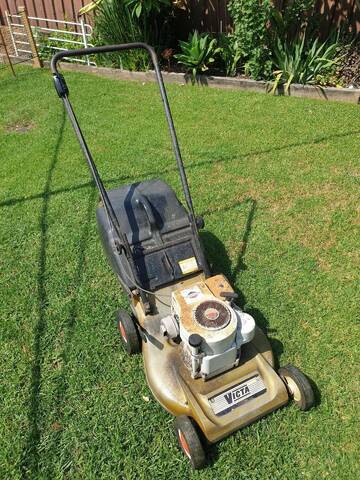
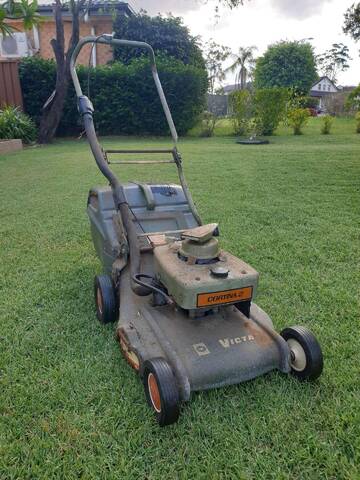
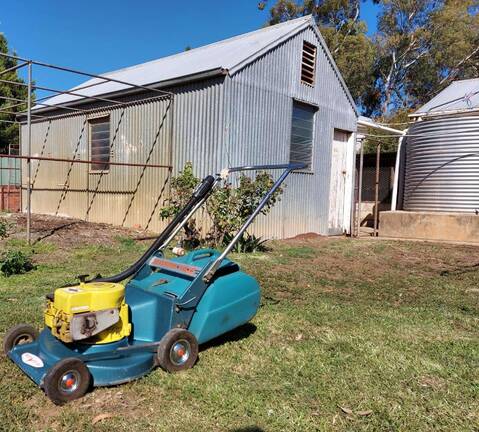
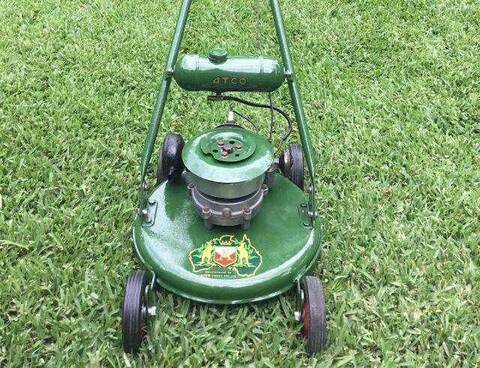
If the bolts were being levered from side to side, and the joint had some compliance, that could generate cracks at the base of the nuts, where they are welded to the rails, due to local flexing. That seems to be consistent with your picture, mikeo.
I dealt with a possibly similar problem professionally once, very very long ago. In that instance there was a clamped joint where the pin at the top of a car's rear shock absorber passed through a hole in the floor pan. Cracks were developing at the hole in the floor pan and radiating outward. I fixed it by pressing a 2" diameter anulus (a toroidal indentation if you prefer) into the floor pan around the hole. This permitted the necessary deformation under load to occur over a substantial amount of metal some distance from the hole. It worked: no more cracking.
If this situation is similar, adding rigidity to the rails right at the bolted joints, as aussietrev proposes, could potentially cause very high loads on the engine mounts. At present the thin rails may be acting as compliant engine mountings, instead of the more usual (and durable) rubber blocks. I recall a building services engineer (well his job description said he was an engineer anyway) who had a locally-made centrifugal pump that was so badly out of balance that it continually over-stretched and broke its rubber mountings. This guy deleted the rubber mounts and bolted the pump to the structure, which happened to be the reinforced concrete roof of an office. This resulted in a continuous noise level in the office in excess of 90 dBA. By a miracle the bolts were strong enough to transmit the enormous vibration-induced loads they had to carry.
Perhaps a simple and workable solution in this case would be to sandwich 2-3 mm neoprene strips between the engine and the rails, together with similar isolation between the heads of the mounting bolts and the engine's mounting points. The objective would be to absorb the engine's vibration (both vertical and horizontal) in these rubber joints rather than transmit it to the rails and the rest of the mower. There might be an increase in operator comfort as well as structural durability.