It is unlikely that the ignition timing curve for a fairly high performance 2 stroke, chosen at random, would work well in a fairly low performance 2 stroke, chosen at random. Modern ignition systems are mapped at various loads and speeds, and the computer does a "lookup" operation to choose an ignition timing to suit the combination of intake vacuum and engine speed (and probably altitude and ambient temperature as well). The Capacitive Discharge Ignition unit just generates the spark, it does not determine the timing. A modern ignition system - at least, a car one anyway - has a whole suite of sensors to provide data for the engine computer.
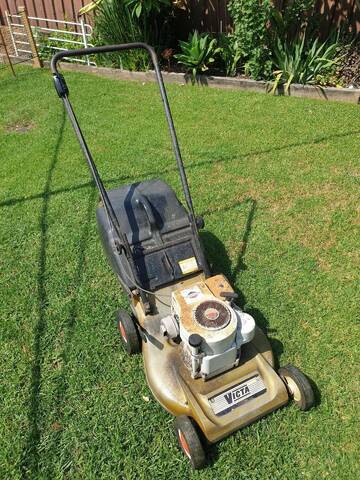
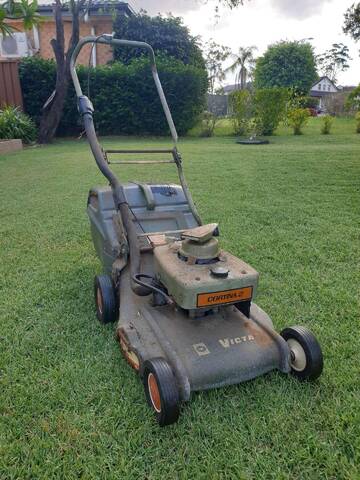
Developing an improved performance Victa engine would take an engine dynamometer, some fairly advanced instrumentation, and a lot of time spent in libraries getting into the issues. Of course you would need a supply of engines and engine parts to use up along the way, plus a draftsman and a good machine shop to make modifications. It would most likely take years of work even when you had all that, unless you did it full-time or had quite a lot of help. There is a short-cut way, where you just read the magazines and blogs, and try to copy what someone else has done as accurately as possible. You can't build a world-beater by copying, but you can know what you are going to get before you start the build project. One thing you can be fairly sure about: if you just guess, you will get bad results.
I remember an amateur enthusiast way back in the early 1960s who decided he was going to supercharge his MGA. He had his engine professionally dynamometer-tested, then rebuilt it with the blower and his other modifications, and had it put back on the dynamometer. The result was almost exactly the same horsepower that it had before he started. The reason was obvious to engineers but not to him: he fitted an ordinary racing camshaft, with a long overlap period (both valves open at once) at the end of the exhaust stroke, but with a supercharged engine all that did was dump all the supercharger pressure into the exhaust system, so his engine effectively had no supercharge pressure. He needed a supercharger-type camshaft, that closed the exhaust valve early to allow pressure to build up in the cylinder at the beginning of the intake stroke, and maintain the pressure throughout that stroke. You can learn all this stuff the hard way by studying it, or you can copy someone, but blind experiments very seldom teach you anything.
Anyway, that is more than enough ranting. The short summary is, I think the most practical way to build your high performance Victa is to get hold of a standard set of hot-up parts that have been designed and documented by someone else who spent a lot of time and money doing it.