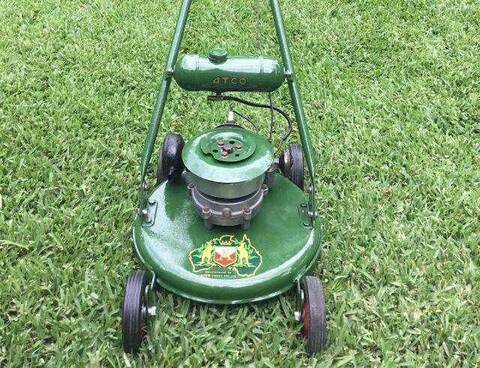
I’ll give it a go on a milk bottle first, so I don’t stuff it.
Ahh, no - milk bottles are Low Density PolyEthylene, catchers are High Density PE. Very different materials to weld. Look around for a plastic bucket - they're HDPE. The Recycling Symbol for HDPE is 2, BTW.
Re the plastic welder, yes there are alternative kits available; I just linked that thread to show a nice welder kit example, really.
Funny you mention powder coating. I’ve heard what you say before, but surely there are powder coats, and then there are powder coats? Like Oils ain't Oils, kinda thing? I’m curious to know how paint can avoid this, when in theory it could trap moisture underneath as well?
Well, there are two aspects to that.
One is the quality of the bond formed between the metal and the coating - paint will bond better, to a well-prepped metal surface, as a rule.
T'other is the mechanical strength of the coating; when a paint coating fails or is chipped by object impact, it will lose local film integrity, and flake off - but the flake size will be limited to the area where the coating/metal bond has been destroyed.
Powder coats however, will lift off the metal surface, but remain an intact film, with a small gap between the coating and the metal.
This situation is tailor-made for a phenomenon known as 'capillary action' [CA]. The effect of CA is to draw water into this gap, from any 'break' in the coating, and trap it against the metal surface. The powder coat film prevents evaporation of the water, and corrosion cells [corrosion is an electrochemical phenomenon] will be established, and start to gnaw away at the metal, forming rust.
Rust has a volume ~7x that of the parent metal [engineer's rule of thumb], so that will lift even more of the coating away from the metal, and the corrosion will consequently spread very rapidly.
With that cover job for future me, I thought I'd drop the oil out of the 'box, or at least see if there was any. I looked for a drain plug and all I found was what looked initially like a rivet. It isn't a rivet. I think the thead has been mostly stripped.
Righto, that pic has made all things clear. Yep, that's a rivet, and your machine actually has the AD MkII type gearbox. This one is grease-packed, which is supposedly good for the 'life of the mower'. Don't tackle a re-pack until you get the shop manual - it's a complex assembly. Recommended grease is BP Energrease A0, which is NLA - I'll get back to you with a current equivalent.
That didn't go according to plan either. The blade carrier nut is too big for any impact sockets I have, or any spanners, not that there was any real danger of getting it off with a stuffed elbow currently.
It's a 1" AF nut; removal calls for a rattle gun, or it can also be done with a long ring spanner, and a 2lb hammer to hit the spanner with. As we did back in the 70s, when rattle guns were a factory/motor racing team only tool...
Re the drive belts, there are 31" and 32" lengths -
https://www.outdoorking-forum.com.au/lawn-mo...autodrive-early-models-1972-to-1974-beltand
https://www.outdoorking-forum.com.au/lawn-mo...models-1975-onwards-belt-ch83925a-belm32 While we're at it;
Muffler
https://www.outdoorking-forum.com.au/engines...rs/victa-early-muffler-en71018g-en71920gMuffler gasket
https://www.outdoorking-forum.com.au/engines...ffler-gasket-all-clip-on-models-en71904aAt the end of the day, you haven't had an irretrievable disaster here, and at least you'll have confidence in the condition of the rebuilt top end.

Victa full crank bottom ends are quite bulletproof; only straight-fuelling or water ingress will kill them.
BTW, you're very lucky that the Prismatic fuel gauge is intact - E10 fuel dissolves them! That's been the fate of most of those gauges we see.