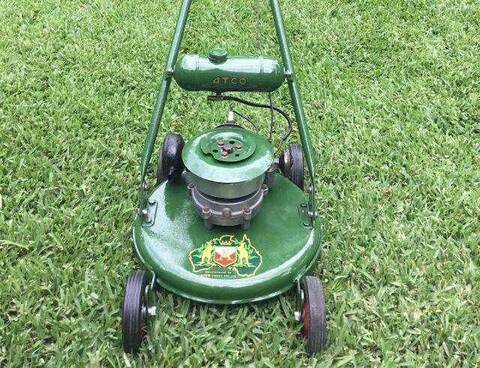
The disc valve is doing the job of a reed valve, possibly before reed valves were invented. It isn't a controlled carburetor or a constant vacuum one. The restrictive hole in the left side of the vertical cylinder with the fuel pipe, is the venturi, and creates a lower pressure (slight vacuum) on the crankcase side of it, which draws up the fuel from the tank. I'm guessing you can, and are intended, to adjust the amount of air entering the left cylinder, and you also adjust the position of the fuel needle with the external adjustment, to select load and speed. Adjusting either of these on its own would change the air fuel ratio, but adjusting both of them should be able to give you a range of operating conditions. The second disk valve in the top of the left cylinder might be to assist in cold starting: you choke the machine by blocking off the air intake completely, and let the disk valve supply enough air for starting rich. Then you open the air intake until you get the right air fuel ratio. If that occurs at too high or too low a speed and load, you adjust the fuel needle position - but being a 2 stroke it probably wasn't all that fussy, and for most purposes just adjusting the amount of incoming air would be sufficient.
If I'm right, this seems an extraordinarily crude piece of equipment for 1936. By then there were V16 cars going more than 100 mph, with style and class. Mind you, it isn't all that much worse than the early Victa slide carburetors with no needle. I guess people used not to expect much from small engines.