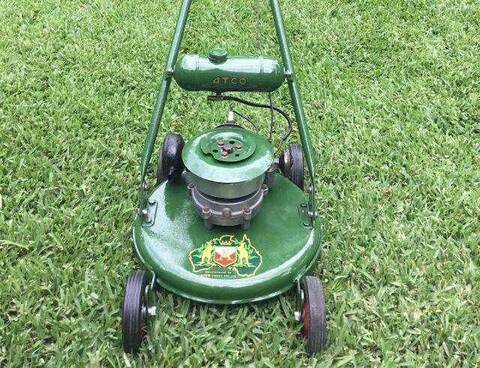
Hi Steve, if I could wade in at this point, there seems to be a bit of debate on the point of full grinding (or "Spin" grinding as it is known) and relief grinding.
Here is some information I have found....It relates more to the tolerances required when cutting the dwarf type grasses found on golf greens and possibly bowling greens.
SPIN GRINDING VS. RELIEF GRINDINGThe most advanced reel sharpeners offer features and methods to accomplish a complete regrind that includes single blade relief and spin functions. Others cannot, so the debate between spin grinding only and spin plus relief has emerged as a hot topic � as is the comparison of �scything� vs. �scissor� actions. Spin grinding alone produces a sharp cutting edge and is often compared to a scythe, which produces a good quality of cut as long as it remains sharp. Keeping the reel sharp can require the time-consuming task of regrinding during the busy periods of summer. If the reel blades are not maintained to a sharp edge, then the bed knife must be kept sharp by facing or filing the front edge of the bedknife. With no relief, the reel blade thickness could cause increased drag as debris is brought between the reel and bed knife. A gap of one to two thousandths of an inch is recommended between the reel and bed knife when you spin grind alone.
On the other side of the debate, if you add a relief grind or grind the back side of the reel blade off as to produce a very thin land area, you can adjust the reel to the bed knife with virtually zero clearance between the two. With new varieties of ultradwarf turf and heights of cut well below 0.100 of an inch, you can measure the amount of leaf tissue being removed only in microns.
A scissor action is attained when the reel in conjunction with the bed knife creates a shearing type action. Just like a pair of scissors, the two blades must be maintained extremely close to each other, so close that measuring would be impractical. The natural juices in the grass blades act as a lubricant and actually keep the reel blade and bed knife at near zero contact. If you want to have increased performance, you can do so by making the reel blades thinner by relief grinding, that is, by grinding away the backside of the blades.
If you have relief grinded your units, a two- to three-minute back lapping replaces the tedious and time-consuming task of removing cutting units and regrinding. Also, doing so will help you maintain a much more precise relationship between the reel and bed knife than front facing the bed knife in an attempt to keep the units cutting properly. This is a very valuable asset in the busy mowing months. By keeping the reels properly adjusted to the bed knife, you ensure that a consistent sharp edge is always maintained. The key to keeping a reel mower cutting properly is in keeping it adjusted. A reel mower is often considered a self-sharpening instrument that will stay sharp if the gap between reel and bed knife is kept intact at �zero� clearance; however, if you allow the reel to become dull due to lack of adjustment, it will not resharpen itself.
Hoping that this might be of interest, Steve.