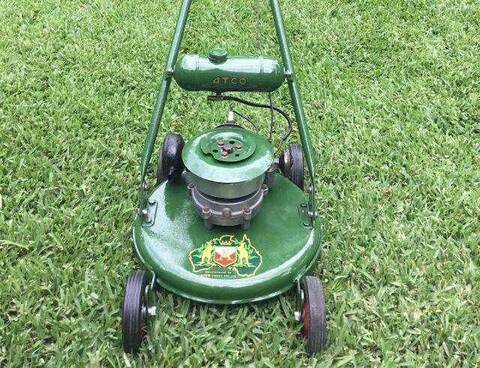
I was using the 600 with a PT on it a few days ago and it stopped and I thought it was out of fuel so I packed things up. I went to put fuel in it this morning and I looked in and it wasn't out of fuel, still had fuel covering the tap. I put more fuel in it and it gave a couple of flutters but would not start. It has spark. I changed float needle, tried a couple of new plugs, tried a squirt of starter fluid, nothing, not a peep out of it. It has compression not excessive but it should run fine as it is. This one has me a little confused as it was working and starting perfectly before it stopped
It's likely to be the starter o-ring which soften and allow the fuel to excape and air to enter during cycle which you lost suction of fuel into the cumbustion chamber. If you're lucky to have purchased this particular starter o-ring that will just soften after couple of used. This o-ring will soften even a day of use and without warning. Of course couple of things to check - diaphragm cover possibly comes off, faulty decompress but unlikely, blocked jet nozzle. As you said, there is a spark, changed float needle and have fuel in the reservoir. Is the spark plug wet or dry during crank? If wet likely to have starter o-ring, if dry likely to be the jet, carby body vacuum issue, diaphragm or fuel supply. Hope it helps.
Starter "O" ring is new, I haven't had any problems with the ones I have been using, but the fact it won't give a hint of firing with a squirt of starter fluid in the plug hole that is the strange one. This bypasses any of the suction side of the motor and usually is an indication that it has been straight fueled which I know it hasn't. If it wasn't for the fact that it is on a 600 that makes it a bit of a job to change the motor I would have just swapped it over, might get a chance to look at it tomorrow
Hi Tyler, fuel is not the problem, I put 4 liters through it the other day and my mixed fuel doesn't last long here either, I go through a fair bit of it. Good point on the plug wire, but I had it on and off several times today and I don't think it would go back in exactly the same spot to short out each time
Squirt with starter fluid only bypass the fuel supply into the combustion chamber but doesn't bypass the air since without the air, no matter what, the engine won't fire up. There are five things need to be present to fire up the engine as we knew: fuel, air, spark, compression and timing. One of this if missing, the engine won't fire up. If you squirt with starter fuel but if there's no air going into the combustion chamber during downward stroke, the engine won't start. If there's no air, possibly puffet valve is closed maybe because the control spring pop out or there's a leak in the crankcase o-ring. Timing: I haven't heard PT of any issue with flywheel misalignment but worth checking. Compression: provided the Piston rings are OK, it's mainly the decompresor valve. Hope it helps.
When you say it has compression, have you hooked it up to a compression tester? Or are you going by feel? Is it possible that the head gasket has blown?
Hi Paul, bore is scored a bit on the exhaust side, not sure if it is recent but I'm guessing this is why it stopped. I will give it a hone to see if it will clean up, put a set of rings in it and see how it goes.
That's a shame to hear, but hopefully the hone and rings will help, fingers crossed. I hate to see a Victa 2-stroke thrown away/destroyed when it's so simple to keep them running forever.
Still though, it's odd. If you're using the correct mix, why would it just all of a sudden stop working?
Specifically for when it cut out (And possibly moments before), were you on a hill/slope? Or were you running on flat ground? If you were on a hill/slope, which side of the mower was up/down?
Have you tried replacing the exhaust? Used a spark tester while the spark plug is installed?
These are the kind of cases I both love and hate haha.
It could be to do with it being mounted to a 600! I read someone saying that full cranks had problems from sideways force from the belt to the blade disc. I imagine a half crank powertorque suffers even more sideways stress in this application. Yours might have thrown up it's arms in protest!
Ahh, if only victa had kept producing the thumblatch catcher series, they would be in better shape today!
Yes Paul at times it was up on some very steep angles,probably 45 degrees I was trying to keep the carby on the lower side but could not use it that way all the time. MF, this motor has done a lot of work so this might have been the last hurrah for the poor thing, I don't think the fact it is a PT that is the issue. I got it cheap because the motor had a strange noise when I tested it.Then I gave it a big kicking by tearing into that massive pile of kikuyu that was also full of rubbish you couldn't see till it came flying out the side.
the motor had a strange noise when I tested it. Then I gave it a big kicking by tearing into that massive pile of Kikuyu that was also full of rubbish you couldn't see till it came flying out the side.
Hi Norm,
Could it be that a bearing has gone? This would explain the noise, and possibly be the cause of the slight scoring on the bore (Misaligned). That said, it wouldn't necessarily explain why it was running, then cut out and wouldn't start.
Being on a decent gradient would explain it cutting out, but not that it won't fire up at all. Unless the transfer port which is normally pretty stacked with fuel is entirely empty.
But to then get not even a single pop when using starter fluid... that's really odd. If you remove the carby, remove the exhaust, spray some starter fluid and you don't get even a single pop (Even if it's weak), I'd say it would have to be the spark. Because by opening the exhaust and intake, you've got plenty of air available and no restrictions, you've got fuel from the starter fluid, and even with almost no compression, you should still get a flame. If you don't, I'd say it's spark related. That could also relate to the noise and scoring mentioned above. If the flywheel is misaligned with the magneto because of the bearings, you could have a spark issue.
Hi Paul; it wasn't a bearing noise, as I explained to Jefffrombrisbane it was a sound I had not heard before, but once I had used it a bit I think that noise had gone, but the poor thing was copping a real hiding doing what it had to do. I will give it a hone and new rings tomorrow and see what happens. I have over 40 motors here that have spark but will not give the slightest hint of firing even with starter fluid. All these motors I test on my test bench using the one carby so that eliminates the fueling side of it and they all test fine with spark and I usually test with the one spark plug so that eliminates the plug as being an issue
I can not see how these symptoms could be a piston or bore issue. More likely fuel or crankcase compression. I have had a misaligned flywheel on a PT. The blade nut was not done up tight enough. Ruined the flywheel.
Still needs the motor taken off the base though, probably easier to put another one on.
If you do have to take trhe motor off the base, please take a picture of that factory pulley for me. I would love to see what a real one looks like.
Hi Jeff, easier to give it a hone and a set of rings with the motor still mounted. The pulley looks the same as the one I took off the one with the Briggs on it and I think it will be the same as the one I have here off a Full Crank. I would say they have used the same pulley on all the 24's. Just the same I will probably pull the motor off just so you can have a look. Weather is a bit average today so I might pass on doing it today as I have a new mission making up these float needle clips.
Ok got to have a look at it and I can't believe it was running reasonably well till it stopped and I have discovered what the odd noise was when I picked it up. Con rod was rubbing on the crank and cut quite a groove in the flywheel. Piston is badly scored so I will just put another motor on it that I have put a new set of rings in.
Here is some pics for you Jeff of the Powertorque/Briggs and I would assume the Honda pulley used on the 24/600's. The one on the left is the F/C and the one on the right is the PT.
How did the conrod wear a groove in the flywheel? Surely they are on opposite sides of the bearing and seal? I wonder what caused that to happen? Bearing shot perhaps?
Do either of those pulleys need a separate boss? The PT one on the right looks very thin ( maybe pressed metal,) without the interfrence fit cone that fits over the flywheel.. Is the PT pulley much different to the FC?
Having never seen either, I'm having a little trouble grasping the concept. Mine is very different.
Hi Jeff, Conrod sits on top of the flywheel, not sure why it was rubbing on the flywheel, I will investigate that later. The PT pulley is a pressed metal one and fits straight onto the standard PT boss. The FC pulley is a solid one with a taper in it to fit the FC shaft taper With the PT one the dished side faces up towards the underside of the motor and this gets the pulley at the right height for the motor to bolt directly to the base. I will get a pic of the base so you can see what goes on there. The Briggs and Honda motors use the same pulley but they have a boss to fit the shaft with the PT prong design but it uses a center bolt to hold it on. This is something I noticed with the 550 I was working on recently it has a FC motor but the boss is held on be a center bolt not the usual big nut. This FC must be specific to the self propelled, just thinking about it I will go back and look a bit closer at that one and have a look and take a fer pics. I removed the pulley on that one to get the belt on and off but didn't investigate it fully.
I was thinking of the flywheel as the alloy part on the bottom just above the boss, with the magnets etc for the magneto. I guess the steel part inside the motor is a flywheel too but I would have called it the crankshaft. Just terms I suppose but now I understand what you mean. Have another look at it, I wonder if the bearing has a lot of play in it perhaps because of the very tight belt drive. It has to be very tight to avoid kick back. I think its too tight for long bearing life.
Your PT 24 pulley is now very similar to the way my substitute ended up. I think it started life as maybe an automotive alternator pulley, or perhaps air conditioner compressor pulley. Probably sourced by a visit to a car wrecker. After I turned it out to fit the standard PT boss, I filed a couple of grooves in it to take the PT boss prongs. Seems to work OK.
The belt that came with my FC 24 was an 11A1180 automotive fan belt. That means 11mm automotive They are very cheap like $12.00. . It was too long so I replaced it with a 11A1155. Its also a little long but the next one down is 11A 1130 but I think that would be hard to get on. I read on this forum that the Victa belt is 11M 1150 and probably is Kevlar or aramid reinforced, so much better but much more expensive. Time will tell how long these automotive belts last. So far so good is all I can say. The original one looked quite old but who knows how much work it actually did. They are all polyester so I think they must stretch more easily.
This just reminds me of the ongoing problem with this slasher. I fitted another motor to it that I had given a hone and put a new set of rings in it, and it fired straight up with no problems so I pulled the motor of and put it on the shelf ready to go the next time I wanted a motor. Fitted it on the slasher and I can't get an attempt to start from it, so I have walked away from that for the moment
Did you change the carby as well or is this the same carby as from the previous motor which would not go either. Not the old stuck needle valve issue? Crook fuel in the tank?
This reminds of the time I was helping a mate with a ute. Original motor was completely shot so fitted new rings and bearings. No go lots of smoke. Blamed out of round bores etc. Fitted a S/H complete engine that was a "good runner". Exactly the same result. Changed carbies a few times to no avail. Turned out the owner had filled the tank with diesel and was blissfully unaware that he had. Drained tank and refilled with petrol. Started first time and ran perfectly.
All this took about 3 months. The smoke should have told us something as should the fact that it was making oil in the sump. Ute still runs well 10 yrs later. We put that down to experience,