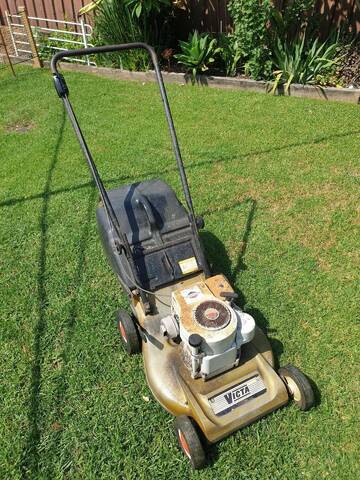
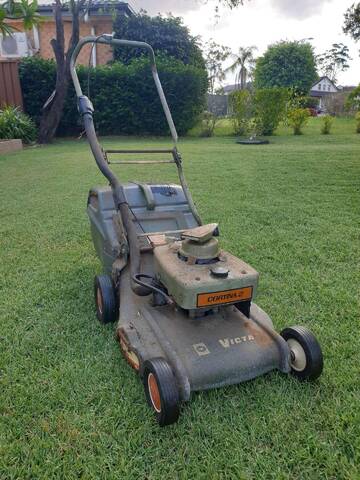
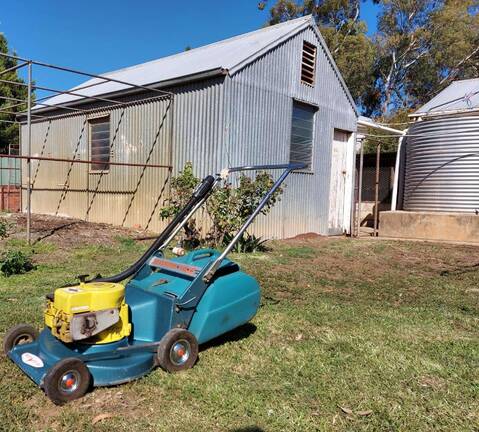
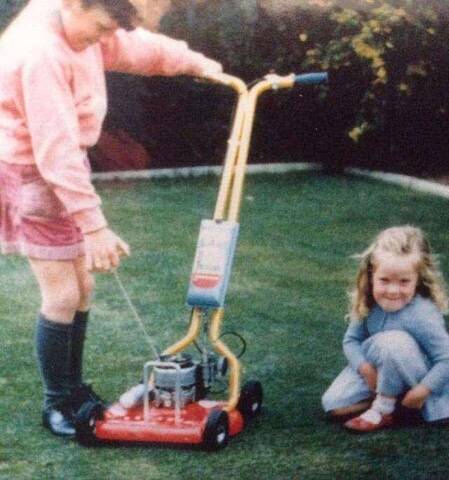
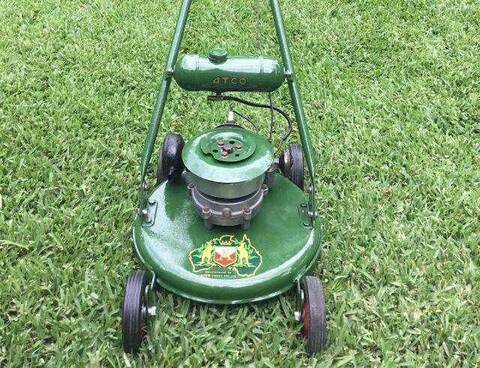
I have also been wondering whether Victa may have been using Pace as there back up plan?
That appears to me to be an intelligent and provocative question...
My personal view is that the newly formed
Victa Consolidated Ltd. were
experiencing unprecedented success in their products. My view is that the
Model 5 Victa changed everything for the company. Extremely high profits
enabled Victa to make investments that both diversified the company and
consolidated its commitment to being
Number One for the 1960s.
I do not feel Pace was Plan B at all - but an example of the strive for
continued market dominance. The 'Pace' name could be easily sacrificed or
suppressed to that end. This is what happened in 1965 - but the Pace name lived
on (as you know), and as one would expect. The Pace brand had value,
even if it became just another product name made by Victa.
I would like to say something potentially controversial now.
I have never been convinced that Victa's secret buying of Pace was
a shrewd commercial move by Mervyn Richardson at all. Merv was not
a soothsayer who could foresee how the 1960s would be played out.
In hindsight, I see that the biggest players in the 1960s were only
just
starting rotary mower production at the time of the Pace purchase.
Rover, Turner, Pope, Supa-Swift, Scott Bonnar - all entered the rotary
market
late in the 1950s. The buyout, if intended to corner the
future market, naturally failed to foresee the emerging big players.
My second point is this:Regardless of the merits of the Pace buyout, Victa was diversifying.
In the early 1960s, Victa's interests expanded into areas I still can not
fathom. I mean, the famous
'Red Phones' (highly profitable);
Victa Homes- Who has heard of them? - (highly profitable); and the grand folly of
the
Victa aircraft (highly un-profitable).
Some good evidence suggests that, to Merv's credit,
Pace was given autonomy in the six or so years it survived.
This was always a good strategy. It was a shame the day Pace
died ... in my view.
Jack



![[Linked Image]](https://www.outdoorking-forum.com.au/forum/uploads/usergals/2016/04/full-9734-27858-pace_model_guide_2.jpg)
![[Linked Image]](https://www.outdoorking-forum.com.au/forum/uploads/usergals/2016/04/full-9734-27859-troy_wass.jpg)
![[Linked Image]](https://www.outdoorking-forum.com.au/forum/uploads/usergals/2016/04/full-7392-27862-pace_mowers_digest_1.jpg)