|
1 members (Burra75),
1,613
guests, and
3,371
robots. |
|
Key:
Admin,
Global Mod,
Mod
|
|
|
|
Joined: Mar 2015
Posts: 249
Apprentice level 3
|
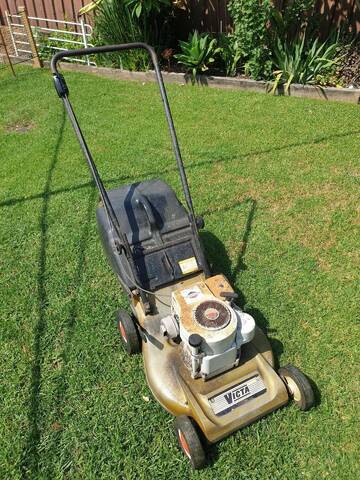
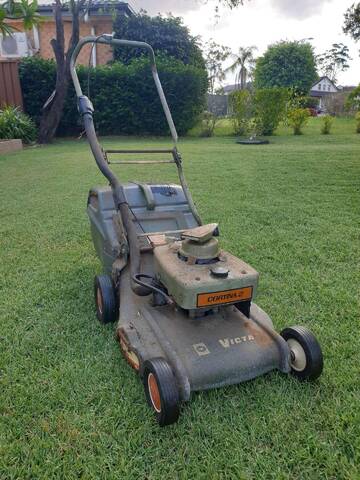
Hey guys, new here.  Just trying to fix our VICTA Vantage mower with a B&S 450 engine. It started a little while ago, it was running poorly. I removed the carb and cleaned, unfortunately looked like the diaphragm/gasket were a little old, so I bought a new one, installed, and mower ran (not that great, but ran). I also changed the oil (which I don't think has ever been changed) with some 15w40 I had left over (Mobil Delvac). Now, after trying to mow the lawn, it would often cut out if too much grass, I think that's normal, but each time became harder to start, until now, it won't start. Trying to prime, nothing would happen. I can hear the sucking sound of air, but no fuel will squirt. I've cleaned the carb & replaced the primer bulb just incase, but no luck. Wondering if anyone had any suggestions? ![[Linked Image from i998.photobucket.com]](http://i998.photobucket.com/albums/af101/Widget1983/Victa%20Mower/IMG_20150321_025336_zpsibcvnibe.jpg) ![[Linked Image from i998.photobucket.com]](http://i998.photobucket.com/albums/af101/Widget1983/Victa%20Mower/IMG_20150321_023534_zpsv3apszeb.jpg) ![[Linked Image from i998.photobucket.com]](http://i998.photobucket.com/albums/af101/Widget1983/Victa%20Mower/IMG_20150321_023524_zps2lrs0vfn.jpg) ![[Linked Image from i998.photobucket.com]](http://i998.photobucket.com/albums/af101/Widget1983/Victa%20Mower/IMG_20150321_023344_zpsqigh366l.jpg) ![[Linked Image from i998.photobucket.com]](http://i998.photobucket.com/albums/af101/Widget1983/Victa%20Mower/IMG_20150321_023401_zpsmfg7lxts.jpg) Summary: - Changed Diaphragm + gasket on carburetor - Changed primer bulb - changed engine oil - cleaned carburetor
|
|
|
|
|
Joined: Mar 2013
Posts: 193
Apprentice level 2
|
There is a check valve comprising of a small ball, spring and rubber seat under the red primer bulb. I suspect this may be faulty. Ensure that the soft diaphragm goes onto the tank first followed by the gasket then carb body.
|
|
|
|
|
Joined: Mar 2015
Posts: 249
Apprentice level 3
|
Thanks Dieselboy, Ill check behind the red bulb asap
|
|
|
|
|
Joined: Mar 2015
Posts: 249
Apprentice level 3
|
I removed the bulb and removed the pieces, they look to be in pretty good/clean condition. The bearing (circled in orange) I couldn't remove and not sure if I should, to clean behind it?? ![[Linked Image from i998.photobucket.com]](http://i998.photobucket.com/albums/af101/Widget1983/Victa%20Mower/7be29a8b-5adf-49d1-89e8-275dd9ff4544_zpsbxrfkmty.jpg) ![[Linked Image from i998.photobucket.com]](http://i998.photobucket.com/albums/af101/Widget1983/Victa%20Mower/IMG_20150321_164456_zpsmsxbsej1.jpg) everything seems clean and carb cleaner squirts through the holes. The only thing left would be that little ball bearing left under the bulb, though im not sure if that surpose to roll freely or removable
|
|
|
|
|
Joined: Jan 2012
Posts: 1,391 Likes: 4
De-registered
|
I just had problems with my 375 sprint. After much checking of all parts, replacing diaphragm and primer, Still had trouble.
My problem was different in the fact it was starving. Start up was fine, but would suck in the primer then stall.
In anycase, perhaps remove and check you main pickup tube. I blew mine through many times and it was always clear. On the 3rd time around I pulled it and ran some fluid through. What happened was a dark spot appeared. It was a fine ball of blondish hair that darkened when wet, but moved freely when I passed the air through it. So when the fuel went in,it swelled and blocked the jet! Its worth a try to pull it and make certain. Not entirely an issue id relate fully to your symptoms, but worth a try if you've checked everything, and its getting no fuel.
The other ball is fixed and is a gallery block, and id doubt it will be any cause for issue. Make sure your diaphragm is the right way up, if applicable to your carb.
|
|
|
|
|
Joined: Mar 2015
Posts: 249
Apprentice level 3
|
Thanks Blue, ![[Linked Image from i998.photobucket.com]](http://i998.photobucket.com/albums/af101/Widget1983/Victa%20Mower/IMG_20150321_173428_zpsw0lbpsbt.jpg) Is that the main pickup tube? (sorry if silly question) Removed and carb cleaner through the hole, ran freely, but might give it another squirt just in case.
|
|
|
|
|
Joined: Jan 2012
Posts: 1,391 Likes: 4
De-registered
|
The main tube in the body at the rear of the image, not the one lying across it.. If youve already removed and checked it, all good:) I know mine was an unusual blockage and was a bit baffled, as ive encounted solid blockages, but not one like blonde hair ball ...lols worth a try.
Guess its time to try other checks.
Good luck.
|
|
|
|
|
Joined: Mar 2015
Posts: 249
Apprentice level 3
|
Oh the big one? just realised it was removable heh. Took it off, cleaned it out. The tube I can see clearly through when holding up to the light, can't make out any blockages. Also sprayed some cleaner through the hole it links with until it squirted through. ![[Linked Image from i998.photobucket.com]](http://i998.photobucket.com/albums/af101/Widget1983/Victa%20Mower/IMG_20150321_180941_zpsuoxfj6hu.jpg) I might re-assemble and see how that goes. Is there anything else that might cause the primer bulb to just suck air and not fuel? Thanks again guys, much appreciated Regards,
Last edited by Widget; 22/03/15 03:22 AM.
|
|
|
|
|
Joined: May 2014
Posts: 133 Likes: 2
Apprentice level 2
|
![[Linked Image]](https://www.outdoorking-forum.com.au/forum/uploads/usergals/2015/03/full-8034-20854-briggs_diaphragm.jpg) Is that the old or new diaphragm? as the parts circled in red are mangled and will cause the primer not to pull fuel.
|
|
|
|
|
Joined: Mar 2015
Posts: 249
Apprentice level 3
|
Is that the old or new diaphragm? as the parts circled in red are mangled and will cause the primer not to pull fuel. Hey MrMckay, that's the new one  .. unless I've somehow installed it wrong.. ill have another look & take another pic. I've just layed it ontop of the fuel tank then the gasket ontop of that. The shape of the diaphragm+gasket only allowed it to line up one way.
|
|
|
|
|
Joined: Jan 2013
Posts: 961 Likes: 20
Moderator
|
Hi Widget, you've installed it correctly but they are mangled and will need to be replaced. The 2 little flaps that are circled should be flat as their purpose is to open and close the holes in that circuit as needed for the carby to function correctly.
Replace the diaphragm and you'll find all your problems will be solved. And remember not to let the carb cleaner come into contact with the diaphragm as it will cause it to curl the way it has.
|
|
|
|
|
Joined: Mar 2015
Posts: 249
Apprentice level 3
|
Aww damn, thanks guys .. can petrol cause this? Where do you guys recommend buying another from? I got this one from ebay http://www.ebay.com.au/itm/180915035239?_trksid=p2057872.m2749.l2649&ssPageName=STRK%3AMEBIDX%3AIT The part number was correct (#795083), though, can you get diaphragms made of different material? Are there any that are less affected by petrol/carb cleaner? recommendations? Thanks guys, Ill heck out another diaphragm and give that a shot Regards, ~ Dave
Last edited by Widget; 22/03/15 12:13 PM.
|
|
|
|
|
Joined: Mar 2015
Posts: 249
Apprentice level 3
|
Does anyone know what material the diaphragms are made of and if the cheaper versions are still generally ok to use? I looked up B&S diaphragms and they seem a lot more costly.. not sure if paying more for branding or whether they're significantly better.
Last edited by grumpy; 24/03/15 04:44 PM. Reason: Removed unsuitable word ("bump")
|
|
|
|
|
Joined: Jan 2012
Posts: 1,842 Likes: 14
Moderator
|
There are reputable brands of aftermarket Briggs parts. Stens [US]/Bynorm [Aust] is a very reliable one.
Current diaphragm elastomers should be unaffected by fuels; but from experience we do not recommend the use of any ethanol-containing fuel, in any small engine.
By its very nature [i.e. its aggressive solvent properties for polymeric substances, which includes gums formed from fuel], carburettor cleaner is going to have adverse effects on just about any non-metallic component of a carby.
Some amateur motorcycle mechanics have had very expensive lessons on that one; destruction of nylon carby parts [which can only be replaced by purchasing a complete new or secondhand carby] happens all too quickly!
Cheers,
Gadge
"ODK Mods can explain it to you, but they can't understand it for you..."
"Crazy can be medicated, ignorance can be educated - but there is no cure for stupid..."
|
|
|
|
|
Joined: Mar 2013
Posts: 193
Apprentice level 2
|
Why not buy genuine, readily available and guaranteed to fit and work.
|
|
|
|
|
Joined: Jan 2012
Posts: 1,842 Likes: 14
Moderator
|
Why not buy genuine, readily available and guaranteed to fit and work. And made in China, just like the clones.  I ordered a genuine carby kit direct from the US, for a 190cc Briggs Quantum XTS50 - sure enough, 'Made in China' was on the box...
Cheers,
Gadge
"ODK Mods can explain it to you, but they can't understand it for you..."
"Crazy can be medicated, ignorance can be educated - but there is no cure for stupid..."
|
|
|
|
|
Joined: Mar 2015
Posts: 249
Apprentice level 3
|
Thanks Gadge, much appreciated. I do believe the fuel I put in might of been E10.. think I might have to get straight 91 or even 95 in there. So the ethanol in E10 is likely to damage the diaphragm ? What about 95/98, how do the additives in those affect mowers? Dieselboy: I looked at the originals, but found (from Aus stores) they're almost double in price, then adding on shipping... I can get from Amazon for about $12 delivered (but still 3x more costly). I figured if the cheaper ebay diaphragms were the same, why pay double Thanks guys, much appreciated
|
|
|
|
|
Joined: Jan 2015
Posts: 1,548 Likes: 25
SENIOR TECHNICIAN
|
The problem with using higher octane fuel fuels is the risk of pre-ignition.
The most of the fuel additives that seems to be causing most of the harm to the equipment are the ones that the consumers are using them without following the instructions closely. I do use fuel stabilizers in my long term storage equipment of my own without problems as our fuel tends to go bad within a few months. Our fuel are nothing like it was when I was growing up. I use 2 cycle oil that has the stabilizer already in it and suffer no ill effects from the E10 fuels.
Most of the carburetor repairs that I do are on equipment that has sitting long term without use and the fuels simply dried up leaving the residues behind causing problems. I have used both OEM and aftermarket carburetor kits for the last 5 years in my business. Once these rubber parts are exposed to the fuels they will go bad no matter what fuel your using. It just depend how resist they are to the fuel.
The main problem I have with aftermarket kits is that some are not made correctly. It is one those gamble you take when buying aftermarket kits which is why I buy one of each on new applications to compare them. I only had one problem with a kit that was made in Brazil where the ethanol destroyed the gaskets overnight. Needless to say I don't use those aftermarket kits. I also have problems with 2 piece Flo-jet carburetor from Rotary as fuel mixture setup threading is incorrect but all do I is order that part of the kit from Briggs.
As for using carburetor cleaners most of my fellow techs here are now using ultrasonic cleaners with soap design for carburetor cleaning and water. The chemical drip damages to newer carburetor too easily. This is especially true on two cycle carburetors. Besides it not environmentally safe to use and is not good for our health either. As with any cleaning system it will not clean everything so there are times that other additives need to added to get the desired results.
Checking your fuel for ethanol is easy enough. Just use a measuring container that marked off in ml that is at least 150 ml. Fill the container with to a multiple of 100 ml. Now add about 50 ml of regular water. Cap and shake the mixture up. Wait a few minutes for the mixture to settle. The water and ethanol will combine and separate from the fuel.
The percent of ethanol will as follows:
100 ml of test fuel to begin with.
The fuel amount after separation equals 90 ml
then fuel contains 10 percent ethanol.
|
|
|
|
|
Joined: Jan 2012
Posts: 1,842 Likes: 14
Moderator
|
98 and above octane number [i.e. the Oz RON rating - the US AKI rating is a bit different] fuels are best avoided, for any carburetted engine. They are intended for, and best used in, fuel-injected engines with closed-loop engine management systems. That is, those with both Exhaust Gas Oxygen and Knock Detector sensors. Edit: The physical properties of these fuels may differ somewhat from lower-octane fuels; i.e. such things as density, viscosity and surface tension - which all affect the actual air/fuel mixture ratio of a carby. It's a known issue for carburetted motorcycles, but these of course have much higher specific power outputs [i.e. in kW per Litre of engine displacement terms] than OPE engines. These fuels also often contain oxygenated compounds other than ethanol, too But I'm a believer in avoiding potential problems, and it's no great hassle to buy 95 for the garden machines. My Coleman Dual Fuel pressure lantern seems to run OK on it, too! Premium 95 is the safest on all fronts, including shelf life, so long as it does not contain any ethanol. I don't buy petrol from my sole local United servo, for just this reason. While there are Federal 'fuel rules' on marketable fuel standards, in practice enforcement falls to the States. And they are 'toothless tigers' on this issue, particularly as regards labels on pumps stating ethanol content. Or 'biodiesel content', for that matter.
Last edited by Gadge; 25/03/15 03:28 PM. Reason: clarification
Cheers,
Gadge
"ODK Mods can explain it to you, but they can't understand it for you..."
"Crazy can be medicated, ignorance can be educated - but there is no cure for stupid..."
|
|
|
|
|
Joined: Jan 2009
Posts: 6,926 Likes: 11
Pushrod Honda preferrer
|
We all have individual views on the use of higher octane fuels. In Australia AFAIK none of the fuels, regardless of octane, has ether content (MTBE, ETBE, TAME etc.), so unless we make the mistake of buying fuel with ethanol content, we do not have problems with fuel stability in storage. I use petrol that has been in the can for five years with no difficulty. Ethers and other oxygenates (chiefly ethanol or methanol) are widely used in the US, and cause a multitude of problems, as well as increasing fuel consumption (oxygenates are fuel diluents: they all have to be mixed with air at lower air/fuel ratios, so you use more fuel per kilometer). The addition of these substances to fuel is not done capriciously in the US, it is done because air quality agencies have determined that there are exhaust emissions advantages from their use, which has become mandatory in some jurisdictions.
Because fuels containing oxygenates require richer air/fuel ratios, they only work correctly in engines either tuned exclusively for their use, or having closed loop mixture control via an exhaust oxygen sensor.
Note that Australian fuels are labelled based on their Research Octane Number (RON) while US fuels are normally labelled based on their "Pump Octane", which is simply the numerical average of their RON and their MON (Motor Octane Number). MON is always somewhat lower than RON (unless you are testing pure Octane, a common fuel constituent), so Pump Octane is always lower than RON. Bear this in mind if you are ever driving in the US: there is no benefit in filling the majority of cars with fuel marked as 91 octane; 89 is perfectly adequate for them, since it is about 91 RON.
The traditional refinery practice in Australia in the day of leaded fuel, was to stream regular octane and premium octane fuels separately, and add approximately the same amount of Tetra-Ethyl Lead (TEL) to each. In the US it was much more usual to add varying amounts of TEL, to provide the chosen octane level. This Australian practice of streaming the fuels separately through the refinery is still practised AFAIK, and as a result fuels of different octane levels have different constituents. Some of the high octane constituents are used in higher concentrations in higher octane fuels, and some of these constituents may be somewhat more likely to form carburetor gum.
Personally I always use 91 RON fuel in any engine approved for 91 RON (89 octane if the handbook is prepared for the US). Aside from saving money, this gives me reasonable hope that the rate of gum formation will be lower. There are no functional advantages in using a fuel of higher octane rating than the engine's requirement.
|
|
|
|
|
Joined: Jan 2012
Posts: 1,842 Likes: 14
Moderator
|
Well, although I don't doubt that you and I could spend a happy few hours discussing this issue face-to-face, I'll 'agree to disagree', at this point of the discussion.
I've had storage life issues with the locally available 91 RON fuels in particular, so I no longer buy it.
My small engine fuel usage is low enough, that the annual cost difference between that and 95 isn't significant.
It also provides a backup fuel supply for my bike [1996 Moto Guzzi California 1100i], for which 95 is the recommended minimum RON [and it seems to prefer BP's 98 RON].
At the end of the day, I guess that all of any of us can do, is to stick with a strategy that has been empirically proven to work for us.
As you're likely aware, the US' so-called 'Pump Octane' is more correctly termed 'Anti-Knock Index', or AKI, as mentioned in my earlier post here.
Cheers,
Gadge
"ODK Mods can explain it to you, but they can't understand it for you..."
"Crazy can be medicated, ignorance can be educated - but there is no cure for stupid..."
|
|
|
|
|
Joined: Jan 2009
Posts: 6,926 Likes: 11
Pushrod Honda preferrer
|
Well we can at least agree on one thing, Gadge: never use fuel of lower octane than the engine manufacturer recommends. Otherwise, as you say, people tend to rely on their own experience. Perhaps the biggest issue is whether you get your fuel from a supplier who correctly labels the pumps, warning customers if there is ethanol in the fuel.
|
|
|
|
M |
T |
W |
T |
F |
S |
S |
|
|
|
|
|
|
1
|
2
|
|
3
|
4
|
5
|
6
|
7
|
8
|
9
|
|
10
|
11
|
12
|
13
|
14
|
15
|
16
|
|
17
|
18
|
19
|
20
|
21
|
22
|
23
|
|
24
|
25
|
26
|
27
|
28
|
29
|
30
|
|
31
|
|
|
|
|
|
|
|
|
Forums144
Topics12,748
Posts106,774
Members18,085
| |
Most Online40,124
Apr 13th, 2026
|
|
|
|


![[Linked Image from i998.photobucket.com]](http://s998.photobucket.com/user/Widget1983/media/Victa%20Mower/IMG_20150321_025336_zpsibcvnibe.jpg.html)
![[Linked Image from i998.photobucket.com]](http://s998.photobucket.com/user/Widget1983/media/Victa%20Mower/IMG_20150321_023534_zpsv3apszeb.jpg.html)
![[Linked Image from i998.photobucket.com]](http://s998.photobucket.com/user/Widget1983/media/Victa%20Mower/IMG_20150321_023524_zps2lrs0vfn.jpg.html)
![[Linked Image from i998.photobucket.com]](http://s998.photobucket.com/user/Widget1983/media/Victa%20Mower/IMG_20150321_023344_zpsqigh366l.jpg.html)
![[Linked Image from i998.photobucket.com]](http://s998.photobucket.com/user/Widget1983/media/Victa%20Mower/IMG_20150321_023401_zpsmfg7lxts.jpg.html)
![[Linked Image from i998.photobucket.com]](http://s998.photobucket.com/user/Widget1983/media/Victa%20Mower/7be29a8b-5adf-49d1-89e8-275dd9ff4544_zpsbxrfkmty.jpg.html)
![[Linked Image from i998.photobucket.com]](http://s998.photobucket.com/user/Widget1983/media/Victa%20Mower/IMG_20150321_164456_zpsmsxbsej1.jpg.html)
![[Linked Image from i998.photobucket.com]](http://s998.photobucket.com/user/Widget1983/media/Victa%20Mower/IMG_20150321_173428_zpsw0lbpsbt.jpg.html)
![[Linked Image from i998.photobucket.com]](http://s998.photobucket.com/user/Widget1983/media/Victa%20Mower/IMG_20150321_180941_zpsuoxfj6hu.jpg.html)