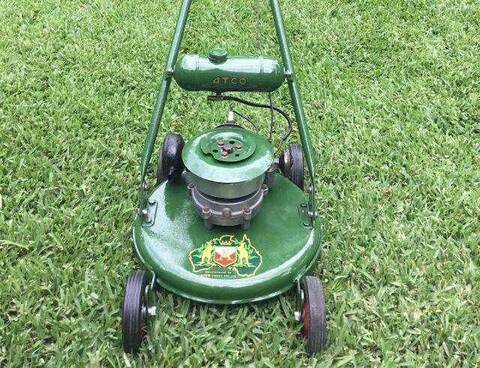
Hello all contributors,
BB, exactly what model 2015 B&S are you referring to?
I think a modern B&S slant engine to be pretty similar in smoothness to an equivalent Honda.
Both are 'sloper' designs now. Both are OHV.
It would be great to get input from an engine engineer as to how forces are transferred
in slant versus upright piston travel engines... and how that relates to smoothness.
A Historical Perspective
It's pretty clear that when Honda introduced their small engines that they were superior
to the kool bore Briggs used on 45s. In fairness to Briggs, the 6, 8 and 9 series designs
were decades old - even before they appeared on Scott Bonnars.
For me, what the Japanese did was wake America from its slumber, in a way very similar
to its automotive experience. Britain, for example, did not respond anywhere near enough,
and their famous cars, bikes and engine manufacturers disappeared one by one.
America did respond. The Briggs engines of today are a result of consumer trends and
demands post the Japanese experience - and shock. I'm keen to dispel myth here.
If a customer wants a low-spec. Briggs, they can but one; if they want a high-spec.
Briggs they can buy that too! Honda has not ventured into the bottom end of the
market; The Chondas do that, and they do it well.
Anecdote
One thing I am keen to dispel are the general statements: Honda: good; Briggs: bad.
It used to annoy me when I knew so much of Briggs' poor reputation post Honda
was beyond their control. OEMs were regularly misapplying models not intended
for the purpose, in order to gain sales as the 'cheaper product'.
At the Briggs Engine Application Centre I personally saw Australian manufactured
lawnmowers (including ride-ons) that were shipped over for specific application
matching. In many cases, it would be the simple (and complex) changing of a
governor spring that would make all the difference between a machine that would
fail - or not fail - down the track. In other cases, the recommendations were
extensive - ranging from specific modifications in the machine design to a higher
specification of engine. And, yes, there was comprehensive vibration testing.
I also knew that thousands of small OEMs never took advantage of this free service,
and Briggs would cop the resulting criticism.
The issue of the 45 rail failures is a complex one and I believe its cause is
plural - causes. The SB45 is in a unique position in that, for many, it is not
considered a vintage mower. Many have served continuously over three or four
decades (and beyond), and many owners repair them with the intention that they
will be every-week mowers - not show pieces! Any component failures now should
be considered both understandable and forgivable.
Would I recommend a Honda as a replacement engine on a 45? Absolutely.
Would I recommend a Briggs as a replacement engine on a 45? Absolutely.
All very interesting.
-------------------------------------
JACK