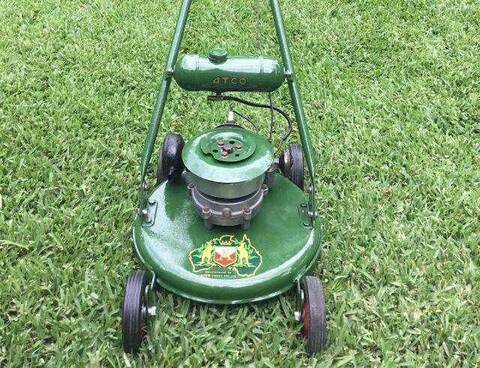
It is important to oil the piston rings before you install the piston in the bore, and to oil the needle roller bearing. You must oil the crankshaft bearing before you assemble the connecting rod to it. Aside from those points the most important assembly issue is putting the connecting rod bearing cap on straight and squeezing it into place with your fingers, to be sure it sits down properly: many of them are capable of jamming because of the complex machining which ensures that the cap is installed square and on-center. Once you have the cap on properly, install the screws and hand-tighten them. Check that there is no gap between the cap and the connecting rod, at the sides of the cap. Then tighten both screws to just a couple of foot-pounds. Finally, tighten the screws with a short-handled socket wrench. On an 8" wrench, apply about 15 pounds force to the handle. After tightening both screws, recheck the first one, then recheck the second one, but don't apply greater force than you did the first time.
After closing the crankcase, rotate the engine a few times with your hand on the flywheel. If it is difficult to turn or the feel is uneven, you have to open it up again and see what has gone wrong.
From what you have said I take it you are not replacing the piston rings. If that is correct there is no real break-in procedure. As long as the engine turns smoothly, just let it warm up for one or two minutes, then put it to work.